
In today's competitive online space, creating content that both search engines and humans love is the key to visibility and success. With algorithms constantly evolving and AI writing tools changing the game, what does it take to truly stand out? The answer lies in mastering a core set of principles. We're diving deep into the essential seo content writing best practices that will elevate your work from good to exceptional.
This guide moves beyond generic advice to provide a prioritized, actionable roundup of what works right now. You’ll learn how to conduct meaningful keyword research, align every piece with user search intent, and structure articles for maximum impact and readability. We will cover everything from demonstrating E-E-A-T signals to executing a powerful internal linking strategy. To fully grasp this modern landscape, it's also helpful to understand the distinctions between AI SEO vs. Traditional SEO and how they intersect.
Whether you're a seasoned marketer, a student aiming for clarity, or a professional using AI, these strategies are your roadmap. We'll also explore how to ethically leverage AI, transforming robotic first drafts into authentic, engaging content with tools like PureWrite. This ensures your unique voice is what truly connects with your audience, helping you create content that not only ranks high but also builds lasting trust. This comprehensive list provides the framework you need to write content that consistently wins.
1. Master Keyword Research & Strategic Integration
The foundation of all effective SEO content writing best practices is a deep understanding of what your audience is searching for. Modern keyword research goes beyond simply identifying popular terms; it's about dissecting the intent behind them. By uncovering high-value keywords, especially long-tail variations, and integrating them naturally, you align your content directly with user needs, signaling relevance to search engines and driving qualified traffic.
A fundamental step in modern SEO content creation is learning how to choose keywords for SEO effectively, ensuring your content targets the right audience. This process involves analyzing not just what people type into Google, but why they are searching for it, which helps shape your entire content strategy.
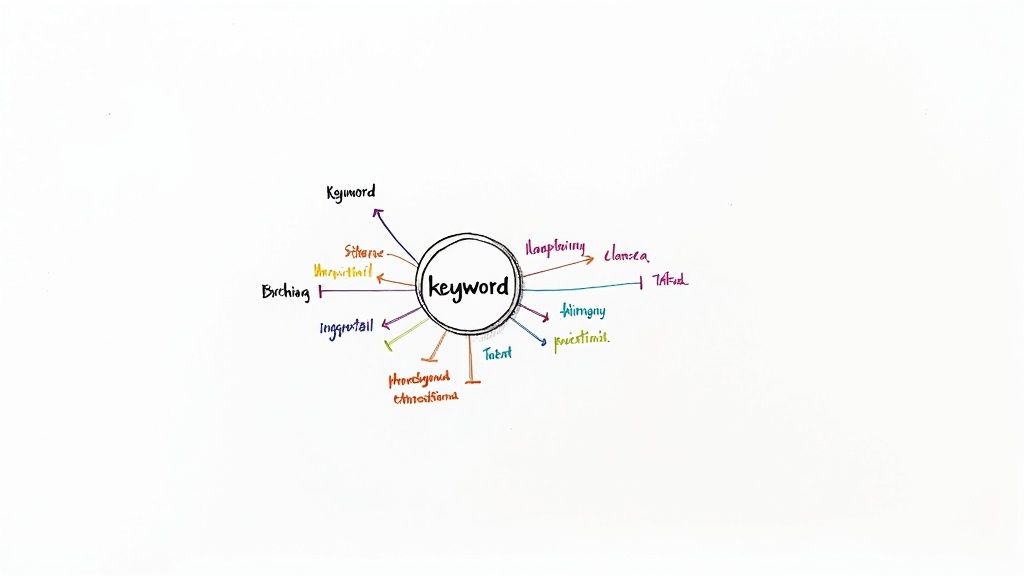
Actionable Tips for Keyword Mastery
Prioritize Search Intent: Use tools like Ahrefs or SEMrush to analyze top-ranking pages for your target keyword. For example, if you search "how to bake bread" and the top results are all step-by-step video tutorials, you know that creating a simple text-based article might not satisfy user intent. Match your content format to what's already winning.
Build Topic Clusters: Identify a primary "pillar" keyword (e.g., "AI content creation") and create a cluster of articles around supporting long-tail keywords (e.g., "using AI for blog outlines," "best AI paraphrasing tools"). This signals your deep knowledge on the subject to search engines.
Integrate Keywords Naturally: Place your primary keyword in your H1, at least one H2 heading, and within the first 100 words. Weave it and its variations throughout the body text, but never force it. Good writing should always come first.
Monitor and Adjust: Use tools like Google Search Console to track which keywords your content is ranking for. If you notice unexpected keywords driving traffic, consider creating new content or optimizing existing pages to better serve that emerging intent.
Keyword research is the blueprint for your article, setting the stage for a piece that both search engines and humans will value. This initial planning is a core component of a successful digital content strategy.
2. Optimize for Content Structure and Readability
Even the most well-researched content will fail if it's an impenetrable wall of text. Optimizing for structure and readability is a critical SEO content writing best practice because it directly impacts user experience. When you make it easy for readers to scan, comprehend, and find answers, they stay on the page longer, signaling to Google that your content is valuable and deserves a higher ranking.
A clear hierarchy, short paragraphs, and strategic formatting make your content more inviting and effective. According to Nielsen Norman Group research, users often scan web pages in an F-shaped pattern, meaning your headings and opening sentences are critical for capturing attention. This ensures your message is not only seen but also absorbed.
Actionable Tips for Structure and Readability
Outline First, Write Second: Before writing a single sentence, create a logical outline using H1, H2, and H3 tags. This builds a clear content hierarchy that search engines can easily crawl and helps you integrate keywords into your headings naturally.
Embrace Whitespace: Keep paragraphs short, ideally no more than 2-3 sentences. This breaks up the text, improves scannability on mobile devices, and makes your content less intimidating for the reader.
Use Formatting Strategically: Employ bullet points and numbered lists to organize information, especially for steps or examples. Use bold text to highlight key takeaways and italics for emphasis, guiding the reader’s eye to the most important points.
Prioritize Clarity: Write in a clear, direct style. AI drafts can sometimes be overly complex; your job is to simplify them. The goal is to communicate effectively, not to impress with complex vocabulary.
By focusing on these elements, you craft an experience that respects your reader's time and attention. This user-centric approach is a cornerstone of learning how to write engaging content that performs well in search.
3. Creating Comprehensive, Topic-Cluster Content
Modern SEO has moved beyond targeting individual keywords to establishing broad topical authority. The topic cluster model is a powerful framework for achieving this. It involves creating a central "pillar" page on a broad topic and surrounding it with a cluster of related, more specific articles that all link back to the pillar, signaling deep expertise to search engines and creating a better user experience for your audience.
This strategic approach organizes your content in a way that search engines can easily understand, establishing your site as a go-to resource. For example, HubSpot used this method to dominate search results for "content marketing" by creating a comprehensive pillar page and dozens of supporting articles on related sub-topics. It's a cornerstone of effective SEO content writing best practices because it builds a strong internal linking structure and demonstrates comprehensive knowledge.
Actionable Tips for Building Topic Clusters
Identify Your Pillar Topics: Start by brainstorming broad subjects central to your business that you want to be known for. These should have significant search volume and align directly with what you offer (e.g., "AI writing," "email marketing," "project management").
Build from the Pillar Out: Create your pillar page first. This should be a comprehensive, long-form guide that covers the core topic extensively but leaves room for deeper dives. Then, develop supporting cluster articles that explore subtopics in greater detail (e.g., "how to humanize AI text," "AI writing for SEO," "best AI paraphrasing tools").
Master Your Internal Linking: The linking architecture is crucial. Every cluster article must link up to the pillar page. Additionally, link relevant cluster articles to one another to guide users and search crawlers through your content ecosystem seamlessly.
Maintain and Expand: Your work isn't done once the cluster is published. Regularly update your pillar page with new insights and links to new cluster content you create. You can explore some of the best content optimization tools to streamline this ongoing process.
4. Search Intent Alignment and User Satisfaction
Beyond keywords, the most critical signal for search engines today is user satisfaction. This is achieved by precisely matching your content to the intent behind a search query. Search intent is the "why" behind the search. Failing to meet this intent results in high bounce rates and tells Google your page isn't the right answer, hurting your rankings no matter how well-optimized it is.
Understanding and aligning with the four primary types of intent (Informational, Navigational, Commercial, and Transactional) is a cornerstone of modern SEO content writing best practices. This alignment ensures that when you provide exactly what a user was looking for, they are satisfied, which is the ultimate goal for both you and the search engine.
Actionable Tips for Intent Mastery
Analyze the SERPs: Before writing, search for your target keyword and analyze the top 5-10 results. For example, a search for "best running shoes" will likely yield review listicles (commercial intent), not a history of running shoes (informational intent). The dominant format reveals the primary intent Google believes users want.
Categorize and Conquer: Assign a primary intent to each of your target keywords. "How to bake a cake" is informational, "Backlinko login" is navigational, "iPhone 15 vs Samsung S24" is commercial, and "buy cheap flights" is transactional. Create content that directly serves that purpose.
Listen to User Questions: Use tools like AnswerThePublic or look at Google's "People Also Ask" section. These questions provide direct insight into the specific information users are seeking, helping you build a more comprehensive and satisfying piece of content.
Optimize for User Behavior: Use Google Analytics to monitor metrics like bounce rate and time on page. A high bounce rate might indicate an intent mismatch. If users leave a product page quickly, perhaps they were looking for a review instead of a "buy now" button.
Perfectly aligning your content with user intent also involves adopting the right voice. You can explore the nuances of what is tone in writing to further refine your content's impact and connect with your audience.
5. E-E-A-T (Expertise, Experience, Authoritativeness, Trustworthiness)
More than just a technical acronym, E-E-A-T represents Google's framework for evaluating content quality and the credibility of its source. It’s a core component of modern SEO, especially for "Your Money or Your Life" (YMYL) topics like finance and health. Demonstrating expertise, first-hand experience, overall authority, and trustworthiness signals to both you and search engines that your content is reliable, accurate, and valuable.
This framework is essential for building a loyal audience that trusts your advice and for achieving sustainable rankings. When you use an AI tool to generate content, it's your responsibility to fact-check, add personal experience, and ensure every claim is accurate and trustworthy. This ethical approach is key to authentic writing.

Actionable Tips for Demonstrating E-E-A-T
Showcase Author Credentials: Include detailed author bylines and bios with photos. For example, a financial article should be written by a certified financial planner, and their credentials should be clearly displayed. Link to their social media profiles or a dedicated author page.
Cite Authoritative Sources: Just like in academic writing, back up your claims with data and link to reputable, primary sources such as studies, government reports, and industry leaders. Citing sources like the Mayo Clinic for health content or CNET for tech reviews boosts your credibility.
Incorporate First-Hand Experience: The "Experience" component is crucial. Share unique insights, case studies, or personal anecdotes. If you are reviewing a product, show that you have actually used it with original photos or videos. This is something AI cannot replicate.
Build Trust Signals: Ensure your website has an SSL certificate (HTTPS), a clear privacy policy, and easily accessible contact information. Displaying customer testimonials, awards, and positive reviews can also significantly enhance trustworthiness.
6. On-Page SEO Optimization (Title Tags, Meta Descriptions, Headers)
While the body of your content is crucial, the elements that frame it are what search engines see first and what entice users to click. On-page SEO optimization involves fine-tuning your title tags, meta descriptions, headings, and URLs to clearly signal your content's relevance and value. This is one of the most direct and impactful seo content writing best practices for improving both search rankings and click-through rates (CTR).
Effectively optimizing these on-page elements acts as a powerful signpost for both search algorithms and human readers. For example, a well-crafted title tag, like those seen on the Backlinko blog, immediately communicates the topic and its benefit, making it stand out in a crowded SERP and inviting clicks. This meticulous attention to detail is a hallmark of high-ranking content.
Actionable Tips for On-Page Mastery
Craft Compelling Title Tags: Place your primary keyword near the beginning of your title tag and keep it under 60 characters to avoid truncation. Use numbers, brackets, or compelling adjectives (e.g., "Definitive," "Simple," "Proven") to boost CTR.
Write Click-Worthy Meta Descriptions: Your meta description is your ad copy in the search results. While not a direct ranking factor, a great description improves CTR. Include your primary keyword and a clear benefit statement within the ~155 character limit.
Structure with Strategic Headers: Use a single H1 tag for your main title, containing the primary keyword. Structure the rest of your article with H2s and H3s that include secondary keywords, creating a logical hierarchy that helps search engines understand the content's structure.
Create Clean, Descriptive URLs: Your URL should be short, easy to read, and include your primary keyword. For example,
yourdomain.com/seo-content-writing-best-practicesis far more effective thanyourdomain.com/p?id=123.
7. Embrace Content Depth, Comprehensiveness, and Freshness
To dominate search results today, surface-level content is no longer sufficient. Search engines prioritize content that thoroughly covers a topic from every angle, satisfying user intent completely. This involves creating in-depth, comprehensive pieces that answer not just the primary query but also all related follow-up questions.
This approach is a core tenet of modern SEO content writing best practices, signaling to Google that your page is a one-stop shop for information. When combined with regular updates to keep the information current, you create a powerful asset that maintains its value and ranking potential over time.
Actionable Tips for Comprehensive & Fresh Content
Analyze SERP Word Count: Before writing, research the word count of the top 10 ranking pages for your target keyword. Aim to create content that is significantly more detailed, but focus on adding value, not just filler words to increase length.
Answer "People Also Ask" Questions: Use Google's "People Also Ask" (PAA) section and tools like AlsoAsked to identify and answer common questions related to your topic. Incorporate these as H2 or H3 sections within your article.
Implement a Content Refresh Schedule: High-value, competitive pieces need regular updates. Create a schedule to review and refresh your most important evergreen content annually, updating statistics, examples, and any outdated information.
Clearly Display Update Dates: Add a "Last Updated" date near the top of your article. This simple signal builds trust with your audience and shows search engines that your content is current and actively maintained.
8. Internal Linking Strategy and Site Architecture
Effective SEO content writing best practices extend beyond the page itself to how it connects with the rest of your site. A strategic internal linking plan creates a logical web that guides both users and search engine crawlers through your content. By establishing a clear site architecture, you distribute page authority, improve crawlability, and help search engines understand the relationships between different pieces of content, boosting your site's overall topical authority.
This organized approach is crucial for a cohesive user experience and signals to search engines that your website is a well-structured, authoritative resource on its subject matter. As Google's John Mueller has often emphasized, internal linking is a critical way to communicate which of your pages are most important.
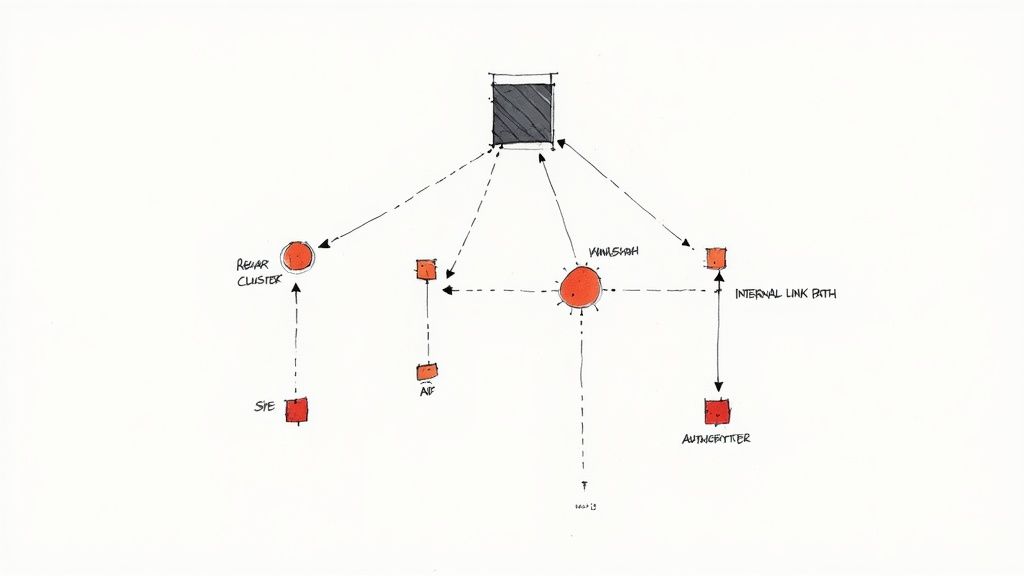
Actionable Tips for Site Architecture
Build a Clear Hierarchy: Structure your site with logical main categories and subcategories, like a pyramid. Your homepage sits at the top, followed by pillar pages for major topics, which then link down to more specific blog posts and articles.
Use Descriptive Anchor Text: When linking between pages, use anchor text that clearly describes the destination page's content, naturally incorporating keywords where relevant. Instead of "click here," use descriptive phrases like "learn more about our content humanization process."
Link from High-Authority Pages: Identify your top-performing pages using tools like Google Analytics or Ahrefs. Strategically add internal links from these pages to newer or lower-ranking content that needs an SEO boost.
Fix Broken Links and Redirects: Regularly use a tool like Screaming Frog or Google Search Console's Links report to find and fix broken internal links. These errors disrupt the user journey and waste crawl budget, negatively impacting your SEO performance.
A thoughtful internal linking strategy is a powerful component of any holistic approach to on-page SEO optimization.
9. Mobile-First Optimization and Core Web Vitals
With the majority of web traffic now originating from mobile devices, optimizing for a mobile-first experience is no longer optional. Google primarily uses the mobile version of a site for indexing and ranking, meaning your content's performance on a smartphone is paramount. This approach, combined with a focus on Core Web Vitals, ensures your site is fast, responsive, and stable, directly impacting both user experience and search engine rankings.
Core Web Vitals are a set of specific metrics that Google considers crucial in a webpage's overall user experience. These include Largest Contentful Paint (LCP), Interaction to Next Paint (INP), and Cumulative Layout Shift (CLS). A poor score in these areas can hinder your rankings, even if your content is excellent. This is a key technical aspect of modern SEO content writing best practices.
Actionable Tips for Mobile and Core Web Vitals Mastery
Test and Analyze: Regularly use Google's PageSpeed Insights and Mobile-Friendly Test tools. These provide a direct look at how Google views your page's performance and offer specific recommendations for improvement.
Implement Responsive Design: Your content must adapt seamlessly to any screen size. Use a responsive theme or framework to ensure a consistent and accessible experience across desktops, tablets, and smartphones.
Optimize Media and Scripts: Compress images and use modern formats like WebP. Implement lazy loading for images and videos that are not immediately visible. Minimize and defer non-critical CSS and JavaScript to speed up initial page load.
Focus on Stability and Speed: Reduce server response time by using a quality host and enabling browser caching. Monitor your Core Web Vitals in Google Search Console to catch and fix issues before they impact your rankings.
10. Strategic Link Building and Backlink Acquisition
While on-page optimizations are crucial, off-page signals like backlinks are what build true domain authority. Strategic link building is the process of earning high-quality, relevant links from other authoritative websites to your own. These backlinks act as endorsements, telling Google that your content is valuable, trustworthy, and deserving of a higher rank.
Effective link building is not about acquiring a high quantity of links; it’s about the quality and relevance of those links. A single, powerful backlink from a respected industry publication like HubSpot or Moz can be more impactful than dozens of low-quality links. This process is a cornerstone of advanced SEO content writing best practices, amplifying the reach and authority of your expertly crafted content.
Actionable Tips for Backlink Mastery
Create "Linkable Assets": The most sustainable link-building strategy is to create content that people want to link to. This includes original research, data-driven studies, comprehensive "ultimate guides," free tools, and unique infographics that provide immense value.
Conduct Competitor Backlink Analysis: Use tools like Ahrefs or SEMrush to see which websites are linking to your competitors' top-ranking content. This gives you a pre-qualified list of relevant sites to target with your own, superior content through strategic outreach.
Master Targeted Outreach: Identify key journalists, bloggers, and site editors in your niche. Build genuine relationships and, when you have a relevant piece of content, reach out with a personalized email explaining why your resource would be a valuable addition for their audience.
Leverage Guest Posting: Writing high-quality guest posts for reputable sites in your industry is a classic and effective way to earn a relevant backlink, tap into a new audience, and establish yourself as a thought leader.
SEO Content Writing: 10-Point Comparison
| Approach | Implementation Complexity 🔄 | Resource Requirements ⚡ | Expected Outcomes 📊 | Ideal Use Cases 💡 | Key Advantages ⭐ |
|---|---|---|---|---|---|
| Keyword Research and Integration | 🔄🔄🔄 | Moderate — keyword tools (Ahrefs/SEMrush), analyst time | 📊 High — improved rankings & qualified traffic | Targeted pages, new content planning, competitive gap analysis | ⭐⭐⭐⭐ Improves visibility; informs content strategy |
| Content Structure & Readability Optimization | 🔄🔄 | Low — editor time, formatting tools | 📊 Medium–High — lower bounce, higher engagement | Blog posts, how‑to guides, mobile content | ⭐⭐⭐ Enhances UX and scannability; supports snippets |
| Creating Comprehensive, Topic‑Cluster Content | 🔄🔄🔄🔄 | High — multiple long-form pieces, editorial plan | 📊 High — topical authority & broader keyword coverage | Pillar pages, authority sites, evergreen subject areas | ⭐⭐⭐⭐ Establishes topical authority; boosts internal linking |
| Search Intent Alignment & User Satisfaction | 🔄🔄🔄 | Moderate — intent research, testing, competitor analysis | 📊 High — higher CTR, better conversions & engagement | Commercial queries, product pages, informational queries | ⭐⭐⭐⭐ Improves relevance and conversion rates |
| E‑E‑A‑T (Expertise, Experience, Authoritativeness, Trustworthiness) | 🔄🔄🔄🔄 | High — expert authors, citations, PR, backlink efforts | 📊 High — stronger rankings for YMYL and trust metrics | YMYL content, brand authority building, expert resources | ⭐⭐⭐⭐⭐ Builds credibility; defensible long‑term rankings |
| On‑Page SEO (Title tags, Meta descriptions, Headers) | 🔄 | Low — CMS edits, brief copywriting | 📊 Medium — quick CTR and clarity gains | All pages for quick SEO wins and metadata optimization | ⭐⭐⭐⭐ Low effort, immediate visibility improvements |
| Content Depth, Comprehensiveness & Freshness | 🔄🔄🔄🔄 | High — research, long‑form writing, regular updates | 📊 High — better rankings, time‑on‑page, linkability | Competitive topics, ultimate guides, evergreen resources | ⭐⭐⭐⭐ Drives deeper engagement; more shareable content |
| Internal Linking Strategy & Site Architecture | 🔄🔄🔄 | Moderate — dev and editorial coordination | 📊 High — improved crawlability and authority flow | Large sites, e‑commerce, knowledge hubs | ⭐⭐⭐⭐ Distributes authority; improves indexation and UX |
| Mobile‑First Optimization & Core Web Vitals | 🔄🔄🔄🔄 | High — responsive design, dev work, CDN, testing | 📊 High — lower mobile bounce, ranking benefits | Mobile-heavy audiences, news sites, e‑commerce | ⭐⭐⭐⭐ Improves performance and mobile UX; required by Google |
| Strategic Link Building & Backlink Acquisition | 🔄🔄🔄🔄 | High — outreach, relationship building, linkable assets | 📊 High (long term) — domain authority and referral traffic | Competitive niches, new domains seeking authority | ⭐⭐⭐⭐ Long‑term authority gains; increases discoverability |
Putting It All Together: From AI Draft to SEO Masterpiece
We've explored the essential pillars of modern SEO, from meticulous keyword research to the critical signals of E-E-A-T. Mastering these ten SEO content writing best practices is not about checking boxes on a list; it's about adopting a holistic mindset that places the user at the center of your content strategy. It's a continuous process of learning, creating, measuring, and refining.
The digital landscape is in constant flux, but the core principles remain steadfast. Search engines are relentlessly working to better understand and serve human users. Your goal is not just to please an algorithm but to build a genuine connection with your audience by providing clear, valuable, and trustworthy information.
Key Takeaways for Sustainable Success
To transform your understanding into tangible results, focus on these overarching themes:
- Audience-First, Always: Before you write a single word, deeply understand who you are writing for. What are their pain points? Aligning your content with their intent is the most fundamental of all SEO content writing best practices.
- Quality Over Quantity: A single, comprehensive, and well-researched article that fully covers a topic will outperform a dozen shallow posts. Invest time in creating cornerstone content that serves as a definitive resource.
- Structure is Non-Negotiable: Great content can fail if it's poorly structured. Use clear headings, short paragraphs, and bullet points to create a scannable, user-friendly experience that keeps readers engaged.
- Trust is the Ultimate Currency: Demonstrating E-E-A-T is no longer optional. It's the foundation upon which your digital reputation is built, directly impacting your rankings and your audience's willingness to engage with your brand.
Your Actionable Next Steps
Feeling motivated? Here’s how you can start implementing these strategies today:
- Conduct a Content Audit: Review your top five performing articles. Can you improve their structure for better readability? Are there opportunities to add more internal links? Can you update them with fresher data to boost their E-E-A-T?
- Map Your Next Topic Cluster: Instead of planning one-off articles, think in terms of pillar pages and cluster content. Choose a broad topic and map out a series of interconnected posts that demonstrate your deep expertise.
- Refine Your On-Page SEO Workflow: Create a simple checklist for every article you publish. Does it include an optimized title tag, a compelling meta description, descriptive image alt text, and strategically placed keywords?
Embracing these SEO content writing best practices is a commitment to excellence. While AI tools can significantly speed up the drafting process, they often produce content that lacks the human touch, nuance, and authenticity required to truly connect and build trust. This is where you, the creator, become indispensable.
Ready to elevate your AI-generated drafts into polished, engaging, and SEO-ready masterpieces? We can help. PureWrite instantly humanizes your text, improving readability and ensuring your content bypasses AI detectors while resonating authentically with your audience. Bridge the gap between AI efficiency and human-centric quality by trying Pure Write today.