8 Different Ways of Writing Every Creator Should Know
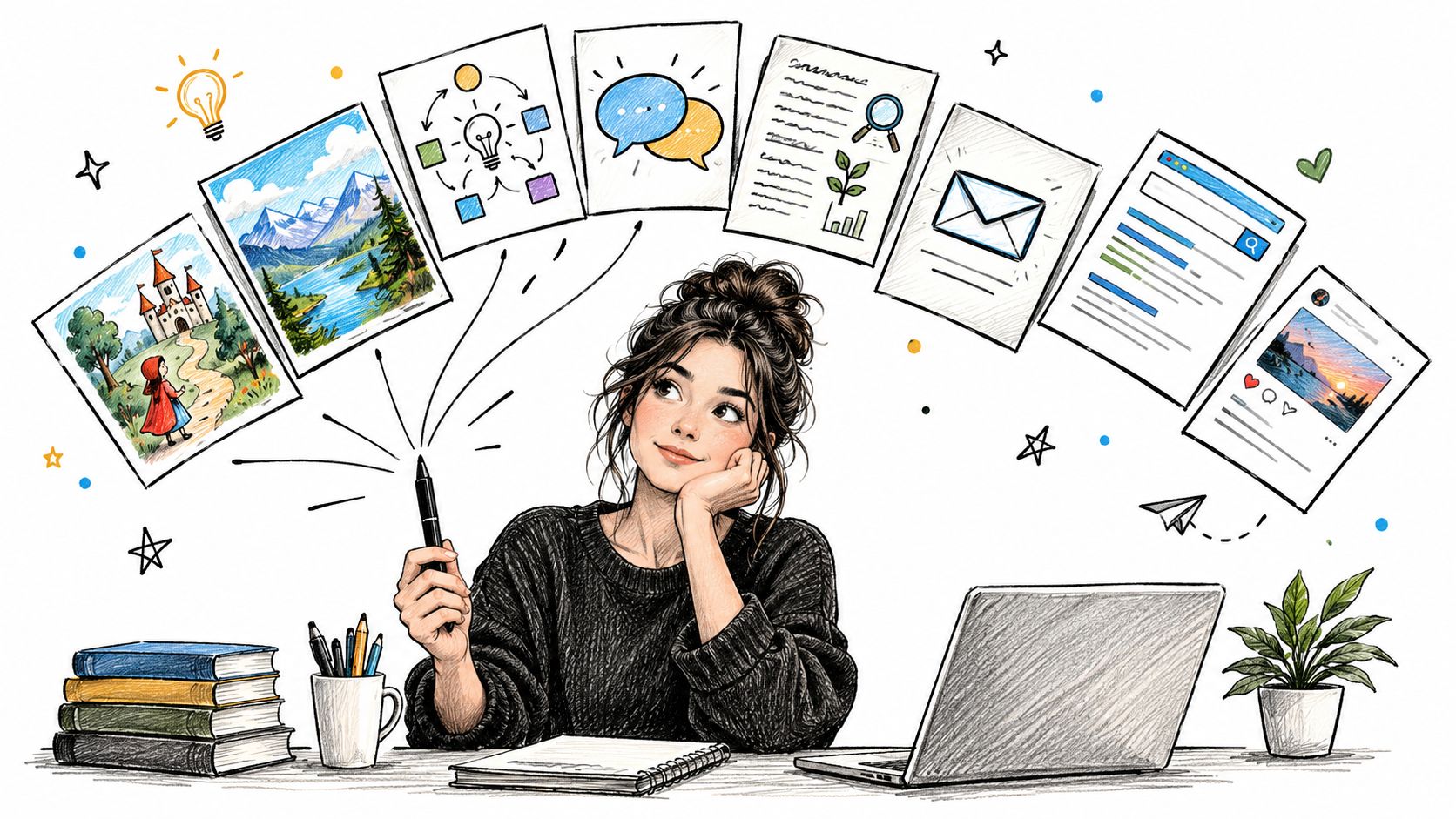
You paste an AI draft into your document, read the opening, and hesitate. The grammar is fine, the paragraphs connect, and nothing looks obviously wrong. Yet the piece feels flat, as though someone wrote a product announcement, a research summary, and a personal essay in exactly the same voice.
The problem may not be the wording. The writing style doesn't match the job. A customer needs clear instructions, a grant reviewer needs evidence, and a reader opening a personal newsletter expects a perspective they can't get from a generic summary.
There are many different ways of writing, each with its own purpose, structure, and reader expectations. Expository writing explains; narrative writing follows events; persuasive writing makes a case. Choosing between them is an editorial decision, not just a tone setting.
Start with the reader's task: What should someone understand, feel, decide, or do after reading your piece?
The methods below aren't ranked. Treat them as tools you can switch between, sometimes within the same document: a story might introduce a problem, an explanation might clarify it, and instructions might help someone solve it.
AI can help you outline, draft, and revise, but you remain responsible for accuracy, originality, and voice. At PureWrite, we recommend deciding what the piece needs before polishing its sentences. Making an unsuitable draft sound smoother won't fix its purpose.
Use the examples and workflows below to identify what belongs in your draft, what to remove, and where human judgment matters most. The aim isn't to make everything sound conversational. It's to make each piece sound right for its reader.
1. Expository Writing
Expository writing explains a subject without trying to win an argument. Use it for an explainer article, a textbook passage, an onboarding overview, or a guide that helps readers understand an unfamiliar process.
Start with the question your reader has. A useful article about invoice approval should explain who reviews an invoice, what they check, and what happens next, rather than opening with broad observations about business efficiency.
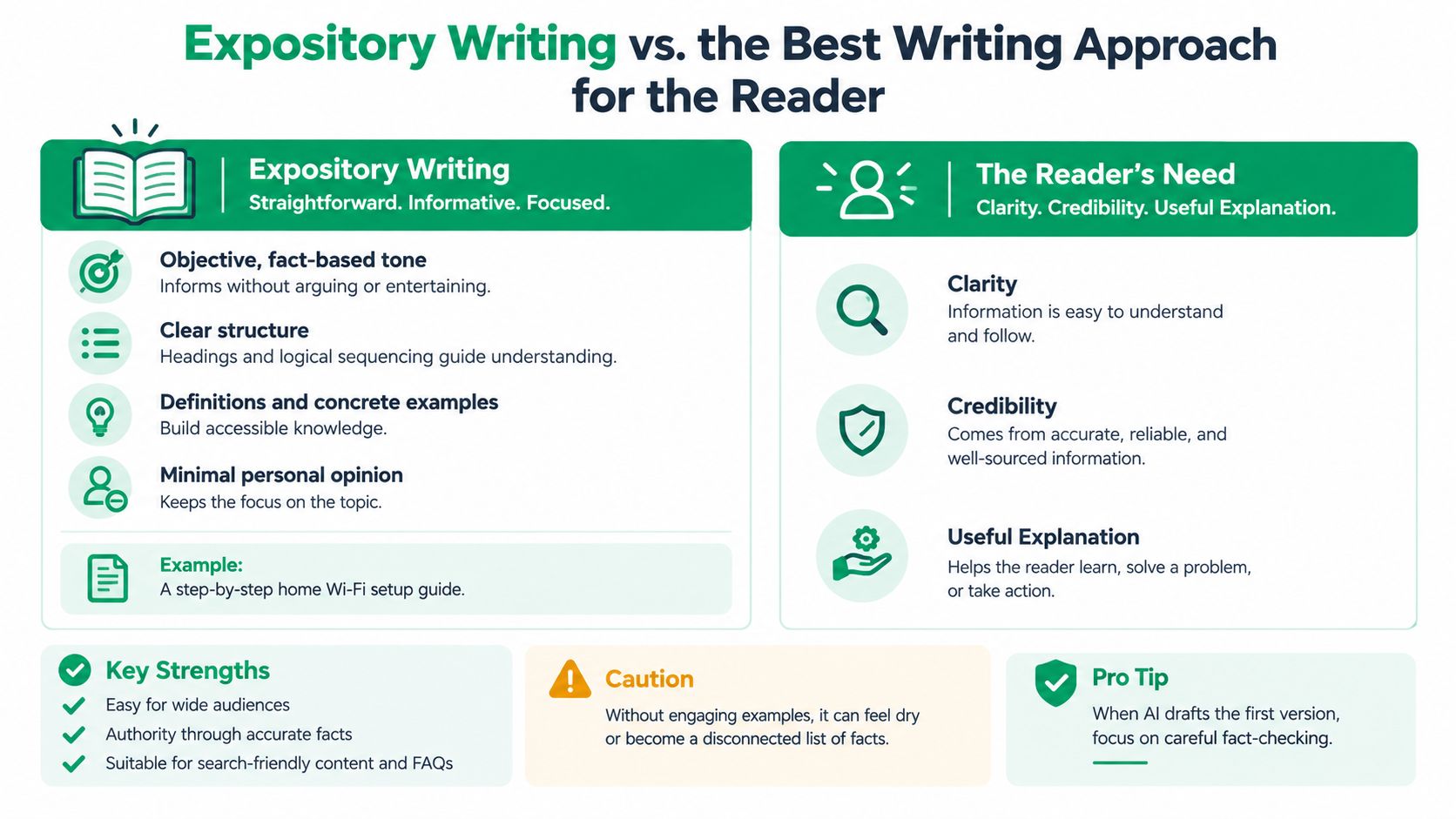
Organize the explanation around sequence, comparison, cause and effect, or problem and solution. Choose the structure that answers the question with the least unnecessary backtracking.
For example, an illustrative explainer about cloud storage could define the term, describe how someone uploads and retrieves a file, and distinguish storage from backup. It shouldn't become a sales pitch for a particular service.
What works and what doesn't
- Works well for: Definitions, educational content, FAQs, and explanations that readers need before making a decision.
- Main trade-off: An objective tone can feel dry if you omit concrete examples or explain facts without showing their relevance.
- Common AI pitfall: A fluent draft may repeat the definition, introduce unsupported facts, or use analogies that obscure important distinctions.
Accessible explanation doesn't require sacrificing precision. In a controlled study involving 170 undergraduate students, accessible scientific abstracts achieved an average readability score of 66.3%, compared with 44.4% for the most traditional style, supporting careful revision for the intended audience rather than formality for its own sake (study of scientific writing accessibility).
A practical PureWrite workflow
Build a source-backed outline before asking AI to draft. Then use PureWrite to refine dense sentences, checking that definitions, qualifications, and relationships between ideas remain intact.
Read each paragraph against its heading: does it explain something new? Our guide to expository versus narrative writing can help you decide whether a passage needs explanation or a story, while this discussion of making complex science clear offers a relevant companion topic.
Keep the facts; remove the friction. Don't add personality at the expense of an accurate explanation.
2. Narrative Writing
A customer story that opens with a list of product features hasn't started telling a story yet. Narrative writing follows someone through a situation, a difficulty, a decision, and an outcome.
Use it for fiction, memoir, personal essays, customer stories, or brand content grounded in real events. Give readers someone to follow and a reason to care about what happens next.

Consider a hypothetical customer story about a freelancer struggling with scattered project feedback. Instead of describing the freelancer as overwhelmed and the solution as life-changing, show the practical conflict: an approval arrives in an email, a correction sits in a chat, and the writer doesn't know which version to send.
That scene gives the eventual decision context. It also keeps the story focused on a recognizable problem rather than manufactured drama.
Build around a meaningful change
A useful narrative needs more than chronology. Select events because they explain what changed and why, not merely because they happened.
- Character: Identify whose experience matters and what they wanted.
- Conflict: Describe the obstacle without exaggerating its stakes.
- Resolution: Show what happened, including any remaining limitations.
Narrative gives abstract ideas a human setting, but it takes space. A reader looking for a password-reset instruction shouldn't have to work through a personal anecdote first.
A true story can be edited for clarity. It shouldn't be edited into a different reality.
Keep AI out of the witness chair
AI can help arrange notes into a beginning, middle, and ending. It can't supply a customer's undocumented feelings, invent dialogue, or turn an uncertain outcome into a tidy success story.
For nonfiction, collect approved quotations, interview notes, and verified events before drafting. Label fictional or composite examples clearly rather than presenting them as customer evidence.
In PureWrite, refine the draft after you've established that factual spine. Review the result for unnecessary emotional language, predictable transitions, and any detail that wasn't in your material.
Preserve the revealing detail, even when it's less polished than the surrounding prose. A specific hesitation, decision, or unresolved problem often belongs in the story more than a sweeping statement about success.
3. Descriptive Writing
The mug has a matte surface and a broad handle gives a reader more to work with than the mug is absolutely stunning. Descriptive writing helps people experience a subject through precise, relevant details.
Use it in travel features, product descriptions, hospitality copy, fiction, and scenes within longer articles. Focus on what readers need to picture or evaluate, rather than trying to engage every sense in every paragraph.

A hypothetical accommodation listing might describe a desk beside the window, curtains that block the afternoon glare, and footsteps audible from the hallway. Those observations tell a prospective guest more than a string of flattering adjectives.
Notice the less flattering detail. Authentic description helps someone judge suitability, not just admire the subject.
Choose details that earn their space
Precise nouns and verbs usually do more work than adjective clusters. Replace an elegant, beautiful, premium chair with details about its shape, material, finish, and intended use, provided you've verified those attributes.
Metaphor can help when it clarifies an unfamiliar experience. Remove it when readers must decode the comparison before understanding the thing itself.
- Best use: Helping readers visualize a place, object, atmosphere, or moment.
- Main limitation: Extended description can slow a task-focused article or hide the information someone needs.
- AI-era risk: Generated copy may invent textures, scents, materials, or personal experiences that nobody verified.
Edit for observation, not decoration
Before drafting, gather the evidence: approved specifications, photographs, field notes, or observations from someone who experienced the subject. If you're writing from supplied materials rather than firsthand experience, don't imply otherwise.
Paste the rough description into PureWrite and refine for clarity and rhythm. Then compare every descriptive claim with those materials, especially anything about comfort, performance, sound, or feel.
A useful editing exercise is to highlight adjectives and ask what each contributes. Keep terms that distinguish the subject; replace vague praise with observable detail.
For multilingual writers, don't automatically remove an unusual but meaningful comparison. Clear writing doesn't require identical imagery or a standardized personality. Preserve phrasing that suits the audience and expresses the author's perspective accurately.
4. Persuasive and Argumentative Writing
Persuasive writing asks readers to choose; argumentative writing explains why a position deserves acceptance. Both need a clear claim, but argumentative work usually gives more space to evidence, reasoning, and competing interpretations.
Use persuasion in sales pages, fundraising appeals, proposals, and campaign messages. Use a more explicitly argumentative approach when writing an academic essay, an opinion column, or a recommendation that readers are likely to challenge.
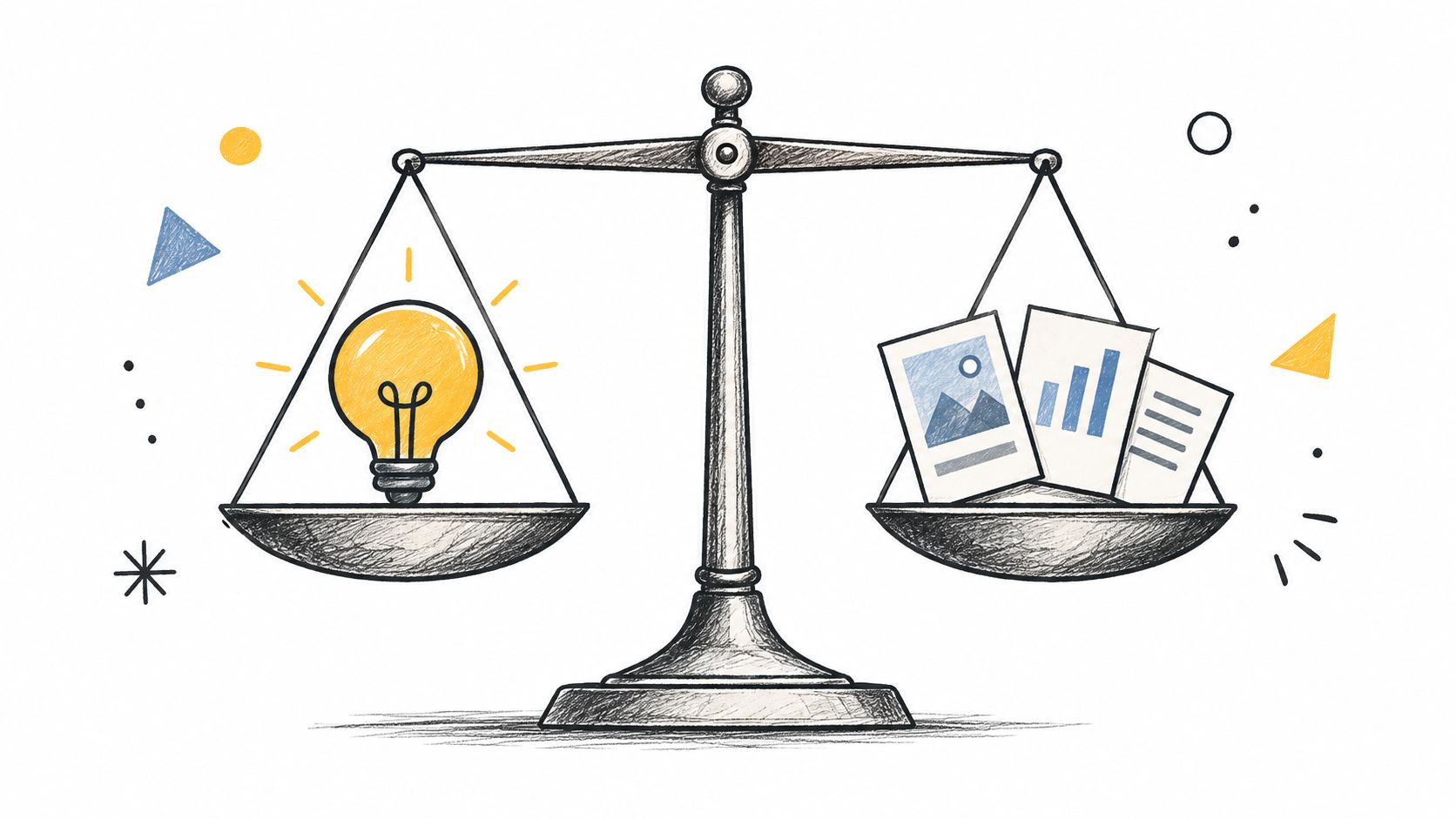
For a hypothetical proposal to introduce shared project documentation, don't stop at a promise of better collaboration. Explain the current problem, show the evidence available, recommend a practical change, and acknowledge the work required to maintain the system.
A reader may reasonably object that another tool creates more administration. Address that objection directly rather than describing resistance as a failure to embrace progress.
Separate the claim from its support
Build the argument before polishing the pitch. Our guide to persuasive writing techniques provides a starting point for shaping the case without relying on inflated language.
- Claim: State what you recommend in language the reader can evaluate.
- Evidence: Include verified data, relevant documentation, or clearly identified examples.
- Reasoning: Explain how that evidence supports your recommendation.
- Counterargument: Address a meaningful limitation, not an easily dismissed substitute.
The strength of this style is its focus on decisions. Its weakness appears when the writer becomes more committed to getting agreement than representing the evidence fairly.
Humanize the appeal without manufacturing certainty
AI can suggest objections or alternative outlines, but treat those suggestions as prompts for investigation. Never publish a generated testimonial, expert quotation, or research citation without verification.
In PureWrite, refine passages that sound pushy, repetitive, or detached from the audience's concerns. Compare the revision with your evidence to ensure a cautious claim hasn't become a guarantee.
An honest call to action explains the next step and who it suits. It doesn't invent urgency, hide costs, or imply that every reader will get the same outcome.
The practical test is simple: could a reader disagree after understanding your case? If your copy leaves no room for a reasonable decision, revisit the framing.
5. Technical Writing
A reader following instructions doesn't need suspense. They need to know what to do, what should happen, and how to recover if it doesn't.
Technical writing covers user manuals, API documentation, standard operating procedures, specifications, and other precise explanations of systems. The priorities are usability, consistency, and subject-matter accuracy.
Write around the task
For a hypothetical file-export guide, begin with the relevant permissions and prerequisites. Then identify the interface action, the available choices, and the expected result, using labels that match the actual product.
Don't replace a verified button name with a more natural-sounding synonym. In instructions, consistent terminology is more useful than stylistic variety.
- Prerequisites: Explain what the reader needs before starting.
- Actions: Give direct instructions in the order someone must perform them.
- Results: Describe the visible confirmation or output.
- Recovery: Explain what to check when the expected result doesn't appear.
Our guide to writing technical documentation can help you develop this task-oriented structure. Have someone familiar with the system review the result, then ask someone less familiar to follow it.
Plain language still needs precision
Technical writing can become impersonal, but adding personality isn't always the answer. Define necessary terminology and remove bureaucratic wording that doesn't carry technical meaning.
In an experiment involving 117 participants, Spanish administrative texts using plain synonyms produced 64.2% comprehension accuracy, compared with 55.8% for jargon-heavy versions, while reading time wasn't reduced (plain-language comprehension experiment). That distinction matters: clearer terminology doesn't mean every instruction must be shorter.
Where PureWrite fits
Use PureWrite to refine explanatory passages, introductions, and troubleshooting descriptions after verifying the procedure. Keep code, commands, field names, units, warnings, and interface labels under explicit human review.
An AI-polished instruction can sound excellent and still be wrong. Test the procedure in the relevant environment, and don't accept edits that change a condition, remove a warning, or imply a result you haven't checked.
This style rewards restraint. Keep enough context to prevent mistakes, but don't make readers sift through a product story to complete a task.
6. Journalistic Writing
What happened, who is affected, and what is confirmed? Journalistic writing puts those questions ahead of atmosphere, advocacy, or brand positioning.
Use it for news reports, organizational updates, public-interest explainers, and factual announcements. Start with the most consequential verified information, then add context and supporting details.
A hypothetical service-interruption update should lead with the affected service and confirmed impact. It shouldn't begin with a paragraph about the organization's commitment to excellence while readers are trying to find out whether they can access their accounts.
Put verified information first
The inverted pyramid places essential facts at the top and less essential background below. It's useful when readers skim or an editor needs to shorten an update without removing its central message.
Cover who, what, when, where, why, and how as far as the evidence allows. If the cause isn't known, say so instead of filling the gap with a plausible explanation.
Reporting boundary: An organization's claim is something to attribute, not automatically something to repeat as established fact.
Distinguish reporting from opinion throughout. A company announcing that its redesign is easier to use hasn't established that users find it easier.
Don't let AI summaries become sources
An AI summary can help you organize documents, but verify the underlying material before publishing. Check names, dates, quotations, figures, and whether the original source supports the summary's wording.
- Direct attribution: Identify who supplied a claim and what they can reasonably know.
- Clear uncertainty: Separate confirmed facts from allegations, estimates, and unanswered questions.
- Relevant context: Include background that changes the reader's understanding, not promotional filler.
Journalistic structure offers speed and clarity, but compression can remove important nuance. When a subject needs investigation or competing perspectives, don't force it into a brief update merely because the format is convenient.
Refine after reporting
Use PureWrite for a final clarity pass once the reporting is stable. Review changes closely around attribution verbs: said, confirmed, alleged, and demonstrated aren't interchangeable.
Keep quotations intact unless you're following an appropriate editorial convention and checking against the original. Humanizing news copy should improve readability, not introduce emotion, certainty, or interpretation that the reporting doesn't support.
7. Academic Writing
Academic writing doesn't become stronger merely because it sounds more formal. Its authority comes from a defensible argument, appropriate methods, careful sourcing, and claims that match the evidence.
Use it for essays, theses, journal articles, and research reports. Follow your discipline's conventions, including the required structure and citation system, whether that's APA, MLA, Chicago, or another specified format.
Make the argument inspectable
A reader should be able to distinguish your interpretation from the work you're citing. Explain why a source matters, how it relates to other evidence, and where your conclusion remains limited.
Avoid replacing precise language with longer synonyms just to sound scholarly. In our guide to improving academic writing, the practical priority is making your reasoning easier to follow without weakening its substance.
- Useful convention: Qualified claims communicate the limits of a result or interpretation.
- Common weakness: Dense sentences can hide missing reasoning rather than demonstrate expertise.
- AI boundary: Language assistance must follow institutional rules and mustn't substitute for required original work.
Treat detection as a signal, not a verdict
A review reports that seven detectors misclassified authentic TOEFL essays by non-native English writers at a mean false-positive rate of 61.3%, illustrating why a detector score isn't definitive proof of authorship (review of AI detection and fairness).
Don't rewrite an essay solely to chase a detector result. Preserve notes, drafts, source records, and revision history, and be prepared to explain how you developed the argument.
For younger students, supervision matters as well. UNESCO's 2023 guidance recommends a minimum age of 13 for independent conversations with general-purpose generative AI tools, alongside safeguards and monitoring for underage users (UNESCO guidance on generative AI in schools).
Use PureWrite as an editing aid
Draft your own analysis and verify every reference before using PureWrite to refine clarity, grammar, or tone. Compare revisions sentence by sentence where technical terms, qualifications, or interpretations matter.
Natural prose isn't evidence of academic integrity, and awkward prose isn't evidence of misconduct. Ethical editing preserves your reasoning, follows disclosure requirements, and keeps you accountable for the submitted work.
8. Digital and Web Content Writing
A reader lands on your pricing page from a search result, scans the first two headings, and leaves because neither explains whether the tool supports annual billing. Digital writing has to make useful answers easy to find while preserving enough context for a real decision.
Use it for blog posts, landing pages, newsletters, social posts, and online resource pages. Clear headings, manageable paragraphs, and specific calls to action help readers move from their question to the next step.
Write for the reader's next decision
A page comparing invoicing tools should address requirements such as approval workflows, accounting exports, payment methods, and client permissions. Repeating “best invoicing software” in every paragraph gives search engines a keyword but gives the reader little reason to stay.
Digital distribution is flexible and reader behavior is measurable. Those advantages still do not excuse shallow content.
- For search content: Answer the question directly, then add distinctions, evidence, and examples.
- For landing pages: Explain the offer, who it suits, where it falls short, and what happens next.
- For social posts: Keep one coherent point while adapting spacing and emphasis to the channel.
Our digital content strategy guide explains how to connect individual pages to audience needs. For channel-specific presentation, consult SleekPost's LinkedIn format advice while remembering that formatting cannot rescue a weak idea.
Add value before you humanize
Google identifies scaled content abuse as producing pages primarily to manipulate rankings, including AI-generated pages without added value and automated synonymizing or repackaging (Google's guidance on generative AI content).
Its March 2024 clarification states that enforcement can apply whether people, automation, or both produced the content (scaled-content policy clarification). Manually polishing a generic draft does not create a reason for the page to exist.
Use PureWrite after adding verified facts, original examples, relevant experience, and a clear editorial position. Ask it to smooth repetitive phrasing, tighten transitions, and vary sentence structure. Then check that every heading still describes the content beneath it and every link serves the reader.
Publish because the page helps someone understand, compare, or act. Ready to turn a rough AI draft into authentic web copy? Try Pure Write.
Comparison of 8 Writing Types
| Writing Type | 🔄 Implementation Complexity | ⚡ Resource Requirements | 📊 Expected Outcome | ⭐ Key Advantage | 💡 Ideal Use Cases |
|---|---|---|---|---|---|
| Expository | Low–moderate; organize facts in a logical sequence | Reliable sources, fact-checking, clear examples | Reader understands a topic or process | Makes complex information accessible | Explainers, guides, textbooks, FAQs |
| Narrative | Moderate–high; develop characters, events, and resolution | Time for story development and specific details | Reader connects with and remembers the story | Creates emotional engagement | Memoirs, customer stories, case studies |
| Descriptive | Moderate; select vivid, relevant sensory details | Careful observation and precise language | Reader can visualize or experience a subject | Makes products, places, and scenes more vivid | Travel writing, product descriptions, fiction |
| Persuasive and Argumentative | High; build a claim, support it, and address objections | Strong evidence, credible sources, sound reasoning | Reader is encouraged to adopt a view or take action | Supports decisions with a clear case | Opinion pieces, proposals, advocacy, sales copy |
| Technical | High; ensure precision, consistency, and usability | Subject-matter expertise, style standards, user testing | Reader can complete tasks accurately | Reduces confusion and user errors | Manuals, API documentation, procedures, specifications |
| Journalistic | Moderate–high; prioritize facts and verify them quickly | Timely reporting, reliable sources, careful attribution | Reader gets essential news quickly | Scannable structure and transparent sourcing | News reports, press releases, public updates |
| Academic | High; follow research, citation, and discipline conventions | Research time, credible sources, citation management | Presents a substantiated scholarly argument | Builds credibility through evidence and formal standards | Essays, theses, journal articles, research reports |
| Digital and Web Content | Moderate; adapt structure and tone to platform and audience | Audience research, editing, and performance analytics | Delivers scannable content suited to online readers | Reach and results can be measured across channels | Blogs, landing pages, newsletters, social posts |
Choosing Your Style and Making It Sound Human
The different ways of writing aren't a hierarchy. Technical instructions aren't less creative than a personal essay, and academic prose isn't more valuable than a useful product page. The right style is the one that serves the reader's task.
Choose a primary mode before drafting, then borrow from the others deliberately. A research explainer might open with a short narrative, use expository paragraphs to clarify the findings, and finish with practical instructions.
The danger isn't mixing styles. It's switching purposes without noticing, such as turning an objective explanation into a sales pitch or adding an invented story to make a factual report feel warmer.
Follow a purpose-first sequence
- Identify the job: Write down what the reader should understand, experience, decide, or do.
- Draft in the matching style: Use the structure that supports that outcome, whether it's a logical explanation, a story, a case, or a procedure.
- Add original substance: Include verified observations, relevant examples, firsthand experience, or your own reasoned interpretation.
- Check clarity and naturalness: Read aloud, remove repetition, and confirm that the voice suits both the author and the audience.
You can also change your writing method at different stages. Sketching ideas by hand, outlining digitally, and revising on screen needn't be competing choices.
A meta-analysis covering 22 studies and 6,168 primary-aged learners found a handwriting advantage in writing quality, with an effect size of 0.53, while finding no universal winner across every reading or writing skill (review of handwriting and keyboarding research). Those findings concern a particular learner population, not a rule that every professional should draft by hand.
Keep authorship where it belongs
AI assistance should support judgment, not replace it. You can use it to explore an outline or identify an awkward passage, but you still need to verify the evidence, evaluate the reasoning, and decide what belongs in the final piece.
For multilingual writers, clarity shouldn't require erasing identity. Preserve meaningful community language, culturally specific examples, and accurate terminology while adapting whatever might confuse the intended reader.
Edit toward a reader's understanding, not toward an imagined universal voice.
At PureWrite, we offer a paste-and-click workflow, quality analysis, and Humanize mode to help you refine rough drafts across these styles. Use the feedback on naturalness and readability to guide review, then check the revision against your meaning, sources, and preferred voice.
Treat automated detection or plagiarism checks as supporting signals, not guarantees. They don't replace source verification, permissions, disclosure rules, or your own assessment of whether the work is yours.
To keep developing, revisit pieces with a focused question rather than requesting a complete rewrite every time. Resources on how to improve your writing style can support that practice, but the most useful revision is the one you can explain: what changed, why it helps, and what you deliberately preserved.
Pure Write offers clarity, tone, and naturalness refinement for AI-assisted drafts, helping you adapt your prose to the writing style your reader needs. Bring your next essay, explainer, email, or article to Pure Write , try Humanize mode, and review the changes while keeping your facts and voice intact.