Master Your Workflow: The 5 Step Writing Process for Flawless Content
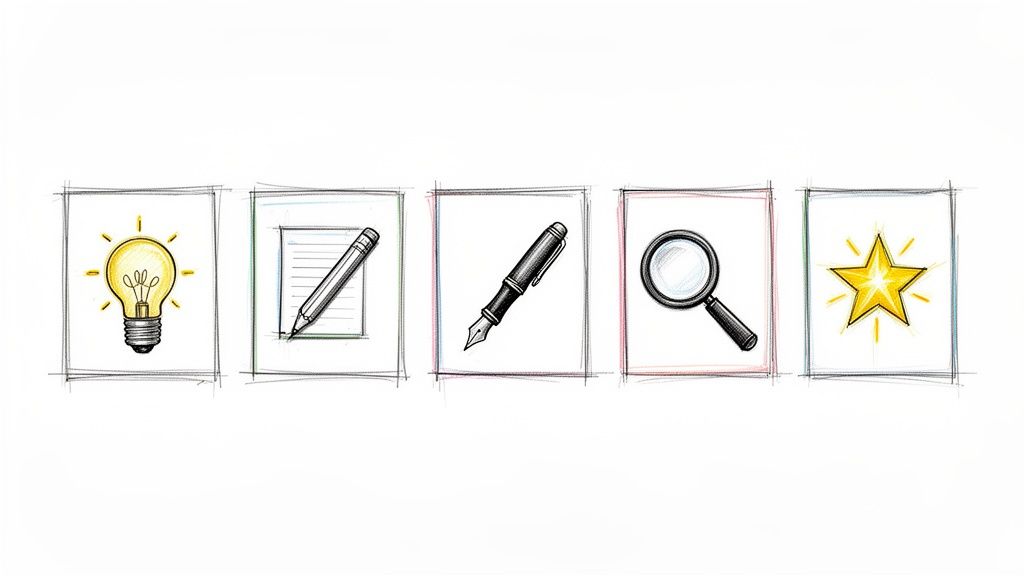
Creating high-quality content consistently can feel like a monumental task. Whether you're a student facing a looming deadline, a marketer striving for engagement, or a professional crafting the perfect report, the pressure to produce is constant. But what if the secret to better, faster writing isn't just inspiration, but a reliable system?
A structured approach is the key to unlocking your creative potential, especially when leveraging AI tools. This guide breaks down the essential 5 step writing process, providing a clear roadmap to transform your ideas into impactful, human-centric content that connects with your audience.
You will learn how each stage works, from initial brainstorming to final publication. More importantly, we'll provide actionable tactics and show you how to ethically integrate tools to enhance your natural voice, not replace it. Let's build a workflow that eliminates writer's block and ensures every piece you produce is polished, authentic, and ready to publish with confidence.
1. Step 1: Prewriting & Planning — The Blueprint for Brilliant Content
Before a single sentence of your draft is written, the most critical work begins. Prewriting is the foundational first step in any effective writing process, serving as the blueprint that guides your entire project. It's the strategic phase where you define your purpose, identify your audience, brainstorm ideas, conduct research, and structure your thoughts.
Neglecting this stage is like trying to build a house without architectural plans. By investing time in planning, you ensure your final piece is focused, logical, and resonates deeply with your readers. This is especially crucial when using AI, as a detailed plan allows you to guide the tool with precision, rather than letting it guess your intentions.
Why This Step is Essential
The prewriting and planning stage is your opportunity to establish clarity and direction. It prevents the dreaded "writer's block" that often stems from not knowing what to say next. This phase ensures every part of your content serves a specific goal.
For example, a content marketer might use this time to create an SEO outline with target keywords and competitor analysis. A student will map out their essay's thesis and arguments, ensuring a logical flow. This deliberate approach forms the core of any strong content development strategy, transforming a vague idea into an actionable plan.
Key Insight: Prewriting isn't about restricting creativity; it's about building a strong container for it. A solid plan gives you the freedom to explore ideas within a focused framework, leading to more impactful and cohesive writing.
Actionable Tips for Effective Prewriting
To get the most out of this foundational step in the 5 step writing process, integrate these practical tactics into your workflow:
- Define Your "Big Three": Before anything else, explicitly write down your Purpose (What do I want to achieve?), Audience (Who am I writing for?), and Key Message (What is the single most important takeaway?).
- Create a Detailed Outline: Go beyond simple headings. List bullet points under each section detailing the specific arguments, data, or examples you will include. This detailed structure is perfect for creating precise AI prompts.
- Brainstorm Multiple Angles: Don't settle on your first idea. For a blog post on "project management," you could brainstorm angles like "for remote teams," "with AI tools," or "for creative agencies." This often reveals a more compelling perspective.
- Document Your Unique Voice: In your notes, write down the specific perspective or personal experience you bring to the topic. This is a crucial step for maintaining authenticity, especially in an AI-assisted workflow.
Using PureWrite for Prewriting
Even your outline can benefit from a quality check. When using an AI to generate ideas, the output can sometimes feel generic. At PureWrite, we recommend running your initial AI-generated prompts or outline through our tools to spot unclear phrasing or logical gaps before you invest time in drafting, ensuring your blueprint is solid.
2. Step 2: Drafting & Composition — Turning Your Plan into Prose
With your blueprint complete, it’s time to build. The drafting stage is where you translate your organized thoughts and detailed outline into the first version of your text. This is the crucial "getting it down" phase of the 5 step writing process, where the primary goal is momentum, not perfection.
In a modern workflow, this step often involves a collaboration between human creativity and AI efficiency. Generating a first draft with an AI tool can overcome the "blank page" syndrome, providing a solid foundation. The key is to treat this initial output as raw material, a starting point for the real art of writing, which happens in the subsequent revision and editing stages.
Why This Step is Essential
The drafting phase gives life to your ideas, transforming research and planning into a tangible piece of communication. By focusing on getting the content out without constant self-editing, you allow for a more natural flow of thought. This approach prioritizes capturing the core message first and worrying about polish later.
For example, a marketer can use AI to generate multiple email variations in minutes, providing a range of options for A/B testing. A professional can produce a grammatically sound first draft of a report, which they can then humanize and polish. This initial creation is the necessary clay from which you sculpt a masterpiece, forming the basis for clear and engaging content.
Key Insight: The first draft is not the final product; it's a discovery draft. Its purpose is to exist so that you have something concrete to improve. Embrace imperfection at this stage to maintain momentum.
Actionable Tips for Effective Drafting
To make your drafting process more fluid and productive, especially when leveraging AI, follow these practical tips:
- Generate with Precision: Use the detailed outline from your prewriting step to create highly specific and context-rich prompts for your AI tool. Better input always leads to better initial output.
- Silence Your Inner Editor: The single biggest rule of drafting is to resist the urge to edit as you write. Focus solely on getting the words down. Correcting typos and rephrasing sentences comes later.
- Keep Your Outline Visible: Have your plan in a separate window or on a second screen. A quick glance ensures you're covering all your planned points and maintaining the logical structure you worked hard to create.
- Generate and Select: Don't be satisfied with the first AI-generated version. Prompt the tool to create 2-3 variations of a section. You can then cherry-pick the strongest sentences and ideas to form a superior foundation.
Using PureWrite for Drafting
The drafting stage is the perfect time to introduce PureWrite into your workflow. As soon as you have your AI-generated first draft, paste it directly into our platform. This immediate check gives you a baseline understanding of its "humanness" and identifies robotic phrasing from the start. Our naturalness score helps you quickly spot which sections need the most work, allowing you to prioritize your humanization efforts before you even begin editing.
3. Step 3: Revision & Rewriting — Shaping Raw Words into Refined Content
The initial draft, whether human or AI-generated, is merely raw clay. The revision and rewriting stage is where the true artistry begins, transforming that rough form into a polished, impactful piece. This step involves a critical review of your draft for clarity, coherence, organization, and alignment with your original purpose.
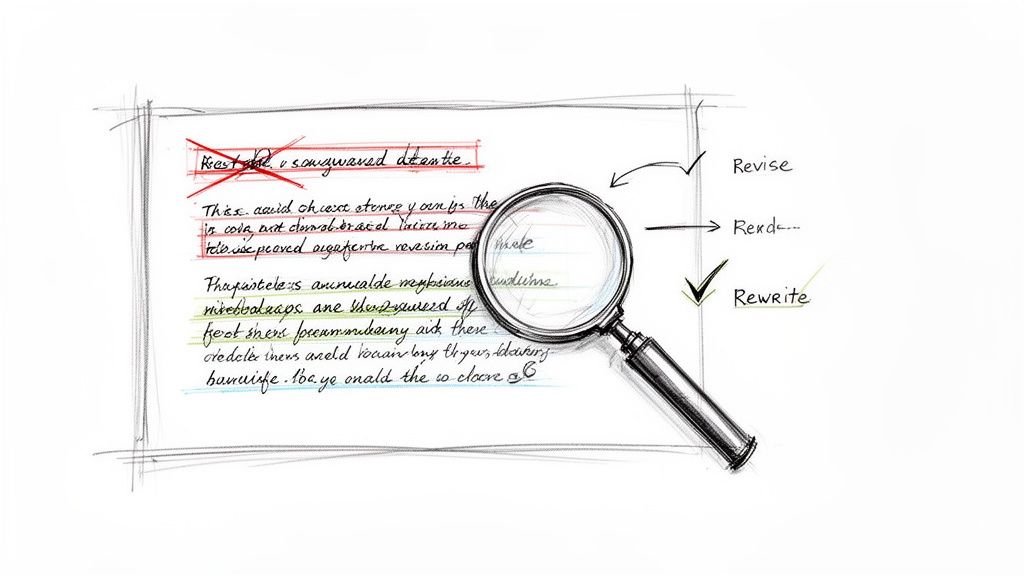
This phase is especially vital when working with AI-generated content. According to a 2023 survey, over 60% of consumers find AI-generated content to be less trustworthy. Revision is where you inject your unique perspective and ensure every argument is solid, elevating the text from functional to exceptional and building that trust.
Why This Step is Essential
Revision is the bridge between a completed draft and a finished product. It addresses both macro-level issues like structural flow and argument strength, and micro-level details like sentence construction and word choice. This is where you challenge your own writing, asking: Is this clear? Is this persuasive? Does this sound like a human wrote it?
For instance, a marketing team might rewrite an AI blog post to better match their brand’s voice. A student would revise their essay to strengthen their thesis and ensure the evidence convincingly supports their claims. This deliberate refinement is central to powerful writing revision strategies, ensuring your final piece achieves its goals.
Key Insight: Drafting is about getting ideas down; revision is about making those ideas count. It’s a strategic process of addition, subtraction, and reorganization that elevates the quality and impact of your work.
Actionable Tips for Effective Revision
To turn your rough draft into a masterpiece, integrate these practical tactics into your rewriting workflow:
- Prioritize Macro, Then Micro: First, focus on big-picture issues like overall structure, argument flow, and paragraph organization. Only after the structure is solid should you move to micro-level edits like word choice.
- Read It Aloud: Reading your text out loud is the fastest way to catch awkward phrasing and repetitive sentences. If it sounds robotic when you say it, it will read that way to your audience.
- Create a Revision Checklist: Stay systematic by using a checklist. Include points like: audience alignment, strength of evidence, clarity of key message, naturalness of tone, and originality.
- Take a Break: Step away from your draft for at least a few hours. Returning with fresh eyes will help you spot errors and weaknesses you previously overlooked.
Using PureWrite for Revision
The revision stage is where PureWrite becomes an indispensable partner. When you have a draft that feels clunky or risks being flagged as AI, our tools provide instant, actionable feedback. Paste your content into our platform to analyze its quality score and check for AI detection risks. You can test different humanization modes on specific sections to see which version best captures your intended tone while preserving your authentic voice.
4. Step 4: Editing & Proofreading — The Final Polish for Perfection
After revising for substance and style, you enter the meticulous final stage of the 5 step writing process: editing and proofreading. This is the quality control phase where you transition your content from 'almost ready' to 'publication-quality'. Editing focuses on technical elements like grammar and punctuation, while proofreading is the last-pass hunt for typos.
Neglecting this step is like designing a brilliant product but shipping it in a damaged box. All the hard work you put into research, drafting, and revising can be undermined by simple mistakes that erode your credibility. This stage ensures that nothing stands between your message and your audience.
Why This Step is Essential
Editing and proofreading are the gatekeepers of professionalism. This stage ensures your writing adheres to established standards, whether it's an academic style guide or a corporate brand voice. It's the final check that confirms every sentence is grammatically sound and every word is spelled correctly.
For instance, a content marketer will use this step to verify SEO keyword consistency and check formatting before a blog post goes live. A student will correct grammar and citation formats to meet academic submission standards. Understanding the nuances between copy editing vs. proofreading reveals their distinct roles in achieving perfection.
Key Insight: Editing is your microscope, and proofreading is your magnifying glass. Use the first to fix systemic issues in grammar and consistency, and the second to catch the tiny, isolated errors that the naked eye often misses.
Actionable Tips for Effective Editing & Proofreading
To ensure your final piece is polished and professional, integrate these practical tactics into your workflow:
- Create a Personal Error Checklist: We all have common mistakes. Do you overuse certain words or struggle with comma splices? Keep a running list of your typical errors and audit every document specifically for them.
- Separate the Tasks: Don't try to edit for grammar, check for consistency, and proofread for typos all at once. Do separate passes for each task to maintain focus and improve accuracy.
- Change the Format: Your brain gets used to seeing the text on a screen. Print a hard copy or change the font and background color. This simple trick helps you spot errors you previously overlooked.
- Read It Backwards: To focus solely on the words and not the content's flow, read your piece one sentence at a time, starting from the last one. This breaks your cognitive bias and makes typos stand out.
Using PureWrite for Editing & Proofreading
Your final pass is where precision matters most. After running your text through standard spell-checkers, we suggest using PureWrite as the ultimate quality check. Our platform goes beyond basic grammar to analyze sentence structure and flow, ensuring your writing is not just technically correct but also genuinely human-sounding. You can also leverage our plagiarism report in this final stage to confirm 100% originality before you publish.
5. Step 5: Publishing & Distribution — Sharing Your Polished Work with the World
After all the planning, drafting, and refining, the final step is to release your work to its intended audience. Publishing and distribution are where your private efforts become public impact. This stage involves much more than just clicking "publish"; it's a strategic process of formatting, optimizing, and promoting your content through the right channels.
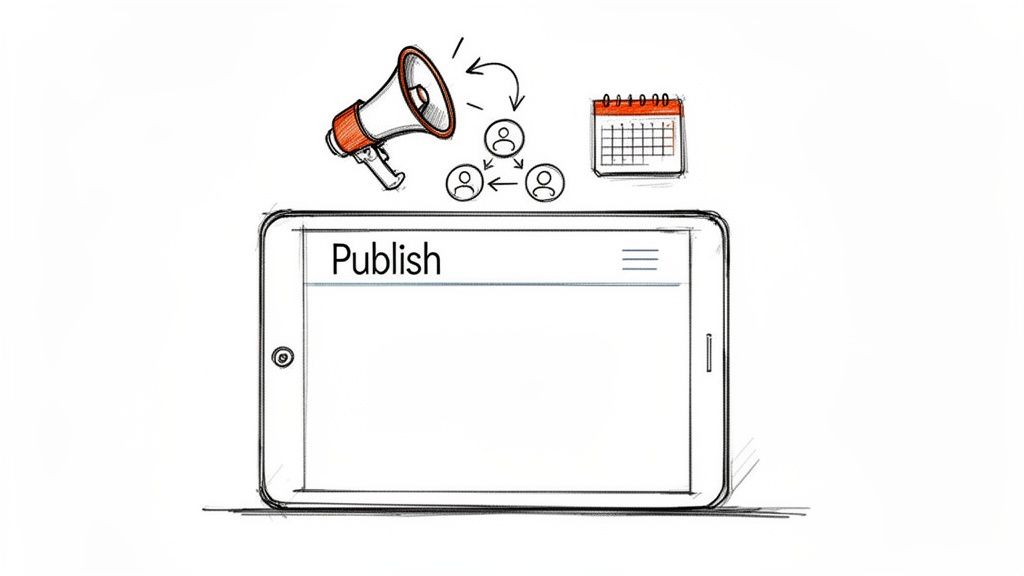
This final phase of the 5 step writing process transforms your meticulously polished document into a live asset. Whether it’s a blog post, an academic paper, or a client deliverable, this is the moment your writing fulfills its purpose. Strategic distribution ensures your valuable insights find the readers who need them most.
Why This Step is Essential
The publishing stage determines whether your content succeeds or gets lost in the digital noise. A brilliant essay submitted with incorrect formatting can receive a poor grade. An insightful blog post without SEO optimization will struggle to attract organic traffic. Effective distribution is what connects your message with your audience.
For example, a marketer will schedule a blog post to go live when their audience is most active and promote it across social media and email newsletters. A professional will perform one final check against the client's requirements for file type and formatting. This deliberate approach to delivery is a key part of our recommended SEO content writing best practices.
Key Insight: Great writing deserves great distribution. The work isn't finished when the writing is; it's finished when the right people have had the opportunity to read it and engage with it.
Actionable Tips for Effective Publishing
To ensure your content makes a successful debut, integrate these tactical actions into your final workflow:
- Optimize for the Platform: Before you publish, optimize everything for the specific channel. For a blog post, this means adding meta descriptions and alt text for images. For an email, it means checking subject lines.
- Schedule Strategically: Don't just publish whenever you finish. Use analytics to identify when your target audience is most active and schedule your content to be released during that peak window. Learning how to schedule social media posts is a key skill for consistent reach.
- Create a Promotion Checklist: Make a list of all the places you will share your new content. This could include LinkedIn, Twitter, an email newsletter, or relevant Slack communities. Don't leave promotion to chance.
- Monitor Initial Performance: In the first 24-48 hours after publishing, keep a close eye on engagement. Respond to comments, answer questions, and monitor analytics to see which distribution channels are driving the most traffic.
Using PureWrite for Publishing
Confidence is key when you hit the publish button. Before your content goes live, run it through PureWrite one last time. This final verification check acts as a safety net, confirming that your work is original, reads authentically, and is free of any lingering AI artifacts. It provides the peace of mind you need to share your work with the world.
5-Step Writing Process Comparison
| Stage | 🔄 Implementation complexity | ⚡ Resource requirements & speed | ⭐ Expected outcomes | 💡 Ideal use cases | 📊 Key advantages |
|---|---|---|---|---|---|
| Prewriting & Planning | Low–Moderate — process setup and direction setting | ⚡ Low immediate resources; moderate upfront time for research and outlines | ⭐ Clear purpose, aligned prompts, coherent structure | 💡 SEO outlines, essays, reports, AI prompt prep | 📊 Reduces revisions, prevents writer's block, ensures consistency |
| Drafting & Composition | Moderate — translating outline into prose, iterative | ⚡ High speed with AI; moderate human oversight for quality | ⭐ Rapid first drafts; variable naturalness and accuracy | 💡 Fast content generation, A/B email variants, overcoming blank page | 📊 Accelerates volume, enables rapid iteration, aids non-native writers |
| Revision & Rewriting | High — structural, argumentative, and voice-level changes | ⚡ Time-intensive; requires critical review and revision tools | ⭐ Polished structure, stronger arguments, natural voice | 💡 Turning AI drafts into publishable content; improving logic and flow | 📊 Major quality improvements, closes logical gaps, reduces AI-detection risk |
| Editing & Proofreading | Low–Moderate — technical polishing and consistency checks | ⚡ Quick final pass if revision complete; needs style guide expertise | ⭐ Publication-ready accuracy: grammar, formatting, consistency | 💡 Finalizing blog posts, reports, academic submissions, client deliverables | 📊 Eliminates errors, enforces style, improves credibility and readability |
| Publishing & Distribution | Moderate — platform formatting, scheduling, and setup | ⚡ Variable resources; requires platform know-how and analytics setup | ⭐ Audience reach, measurable engagement, SEO and sharing impact | 💡 Blog posts, social campaigns, newsletters, syndication | 📊 Delivers visibility, tracks performance, builds authority and ROI |
Your Partner in the Modern Writing Process
The journey from a blank page to a published piece is a structured adventure, not random inspiration. By applying the 5 step writing process, you transform a daunting task into a manageable system for creating high-quality content. This framework provides the scaffolding that allows your ideas to take shape with clarity and purpose.
From the foundational work in Prewriting to the final push of Publishing, each stage serves a vital function. Skipping a step is like building a house without inspecting the foundation. Mastering this process means you spend less time feeling stuck and more time creating work that resonates.
Embracing a Modern, Ethical Workflow
In today's content-driven world, AI can be a powerful accelerator, but it introduces new challenges in maintaining authenticity. This is where a thoughtful approach to the revision and editing stages becomes more critical than ever. It's no longer just about fixing typos; it's about reclaiming your unique voice from a machine-generated base.
At PureWrite, we believe an ethical AI-assisted workflow isn't about passing off AI content as your own. It’s about using AI as a starting point and then applying your critical thinking and creativity to elevate, polish, and humanize the text until it is genuinely yours.
Your Path to Writing Mastery
Ultimately, the 5 step writing process is a roadmap to writing mastery. It gives you control, confidence, and a reliable method for consistently producing your best work. Whether you are crafting a blog post, a research paper, or a business report, this structured approach ensures nothing is left to chance.
For creators aiming for a global audience, understanding the nuances of mastering document translation is an essential skill for expanding your impact. The most successful writers aren't just talented; they are disciplined. They have a process they trust, and they follow it. Now, you have that process too.
Ready to elevate your AI-assisted drafts into polished, human-first content? Pure Write integrates seamlessly into your revision and editing stages, helping you refine tone, enhance clarity, and ensure your final piece is authentic and engaging. Experience the confidence of a perfected writing process by trying Pure Write today.