10 Email Subject Line Best Practices for Higher Open Rates in 2026
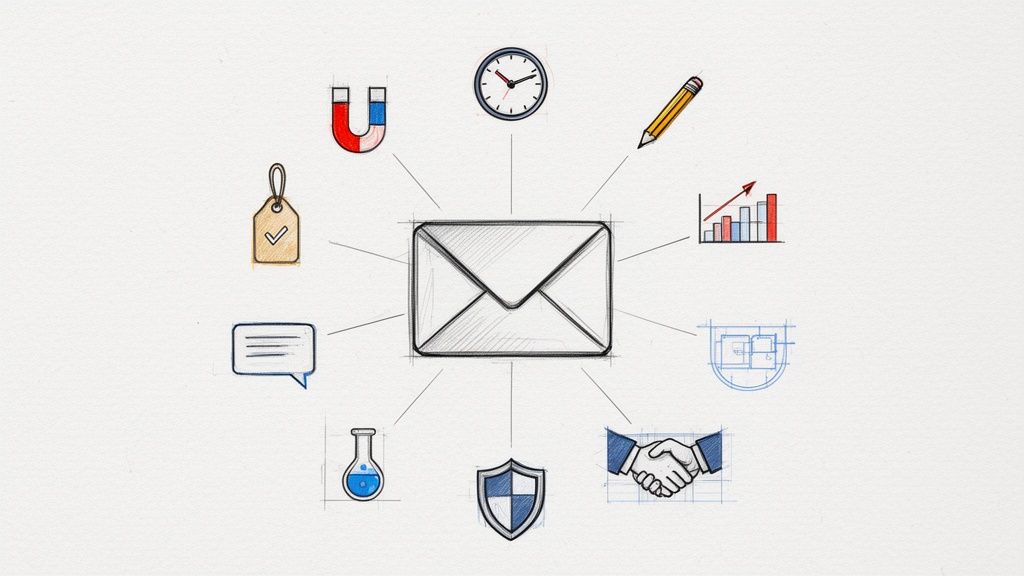
In a crowded inbox, your subject line is the single chance you get to make a great first impression. It's the gatekeeper to your message, and getting it right means the difference between an open and an immediate delete. Statistics show that 47% of email recipients open emails based on the subject line alone, making it a critical element for any content creator, marketer, or professional aiming for impact.
With the rise of AI writing tools, it's easy to create robotic or generic subject lines. At PureWrite, we believe in using AI ethically to enhance, not replace, your authentic voice. This guide outlines 10 actionable email subject line best practices to help you craft compelling, human-centric subject lines that drive real engagement.
You'll learn how to write concise, action-oriented lines, create curiosity, and ensure your message lands in the primary inbox. For a comprehensive guide on proven frameworks, explore more on writing email subject lines that get opened. Let's dive into the strategies that will get your emails noticed.
1. Keep Subject Lines Concise and Under 50 Characters
In the battle for inbox attention, brevity is your greatest ally. One of the most critical email subject line best practices is keeping your message short and scannable, ideally under 50 characters. This isn't an arbitrary number; it’s a direct response to how most people read emails today.
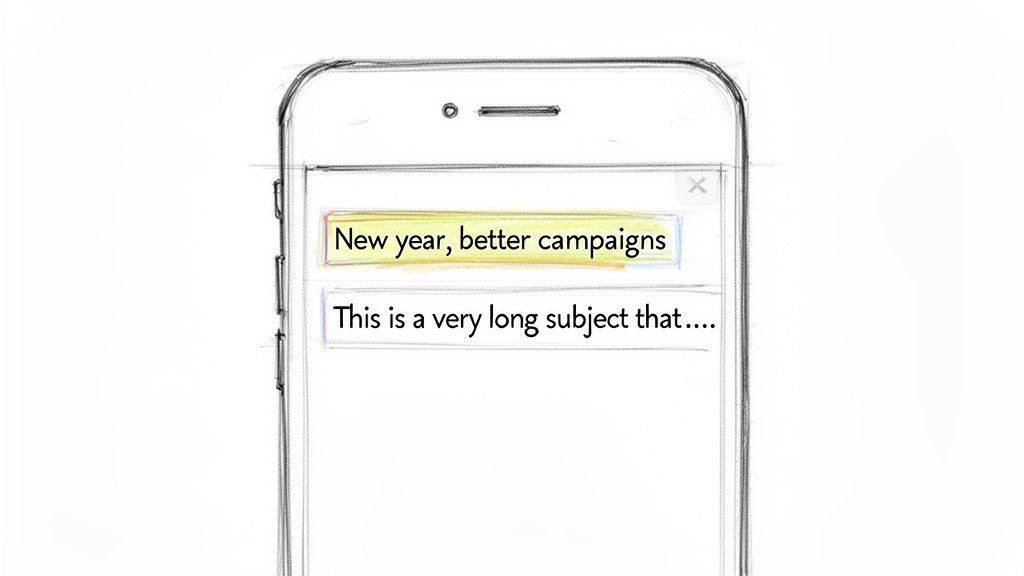
With over 60% of emails being opened on mobile devices, long subject lines get cut off. This obscures your message and reduces the likelihood of a click. A concise subject line respects your reader's time and delivers the core message instantly, improving the user experience and building trust.
Why It Works & How to Implement It
This practice is popularized by industry leaders like HubSpot because it directly impacts open rates. A truncated subject line like "An exciting new update for our..." creates confusion, while a punchy alternative like "Your leads are waiting" creates urgency and curiosity.
To put this into action:
- Front-load keywords: Place the most important words at the beginning so the core idea remains visible if it gets cut off.
- Cut unnecessary words: Remove fillers like "a," "the," and "that." This is a key principle of concise writing.
- Test on mobile: Send a draft to your own phone to see exactly how your subject line appears on different devices.
Before sending your next campaign, let PureWrite help you refine your ideas. We can help you trim the fluff to create a subject line that gets noticed and opened.
2. Personalization and Dynamic Content in Subject Lines
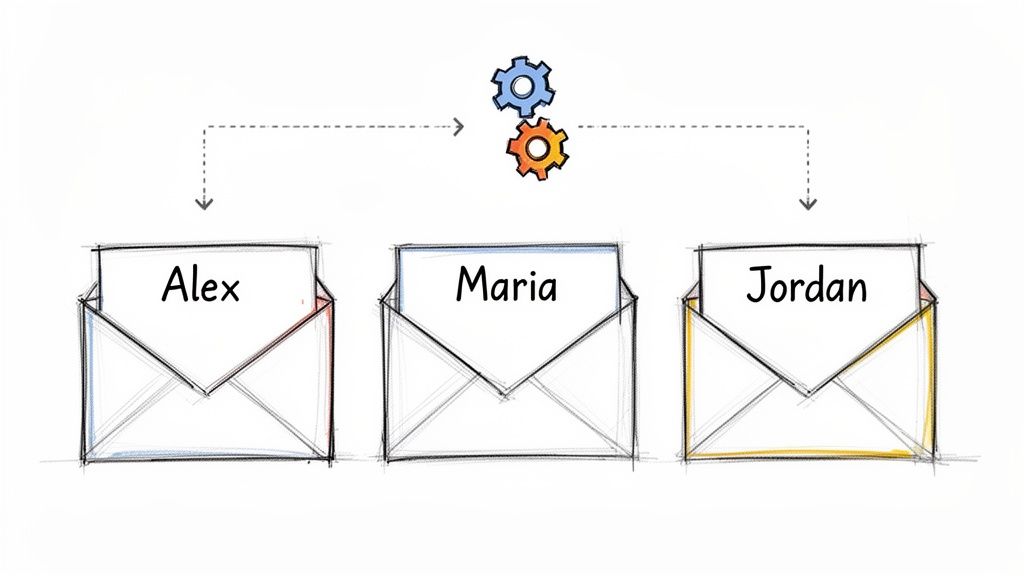
Addressing subscribers by name isn't just a friendly gesture; it’s a powerful strategy for cutting through inbox noise. Using personalization is one of the most effective email subject line best practices, as it transforms a generic email into what feels like a one-to-one conversation.
This approach acknowledges the subscriber's individuality and proves that your message is directly relevant to them. Instead of shouting into a crowd, you're delivering a tailored message to a single person. This builds an immediate connection, making your audience feel seen and valued.
Why It Works & How to Implement It
Research from Experian shows that personalized subject lines can boost open rates by over 26%. A generic subject line like "Don't miss these deals" is easily ignored, but "Sarah, deals on running shoes just for you" is highly relevant and compelling.
To put this into action:
- Segment your lists: Group contacts by demographics or purchase history to make personalization more targeted.
- Use merge tags correctly: Double-check that your platform's merge tags (like
*|FNAME|*) are set up properly. - Layer your personalization: Combine a name with another data point for maximum impact, like: "John, you have 5 new profile views."
- Maintain data hygiene: Ensure your contact data is clean to avoid mistakes like "Hello
[FirstName]".
Let PureWrite help you craft personalized subject lines that sound natural, not robotic. Try PureWrite today to ensure your message feels human and genuine, driving more opens and clicks.
3. Use Action-Oriented Verbs and Power Words
To cut through the noise, your subject line must compel action. Using action-oriented verbs is one of the most effective email subject line best practices. Words like "Discover," "Unlock," "Boost," and "Claim" prompt an immediate psychological response from the reader.
These dynamic words transform a passive announcement into an active opportunity. Instead of simply informing your audience, you're inviting them to participate. This makes your message feel more valuable and less promotional, framing the email as a direct benefit.
Why It Works & How to Implement It
This strategy taps directly into human motivation. A subject line like "Our new features are here" is informative, but "Unlock productivity with new features" is inspiring. The first is an update; the second is a solution.
To put this into action:
- Lead with a command verb: Start your subject line with a strong verb like "Master" or "Transform" to set an active tone.
- Align verbs with your email's value: Ensure the verb reflects the benefit inside. If you offer a discount, use "Save." If it provides knowledge, use "Learn." Learn more about using strong action verbs.
- Test different power words: A/B test verbs to see which ones resonate most with your audience. "Join" might perform better than "Register," for example.
Before you send your next email, let PureWrite help you find the perfect power words. We can suggest dynamic alternatives that sound authentic and motivating, not manipulative.
4. Create Curiosity Gaps and Questions
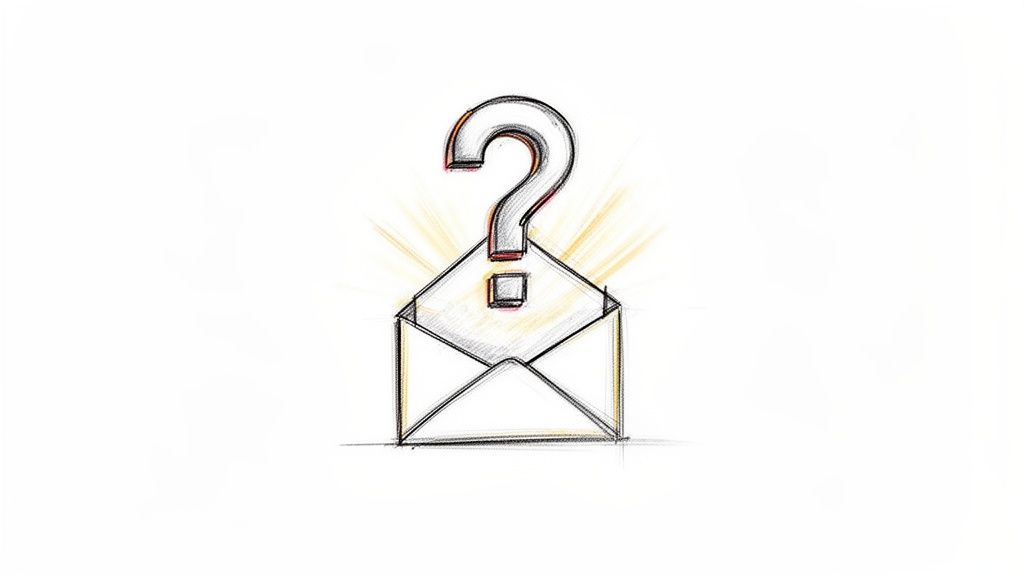
Piquing curiosity is a powerful psychological trigger. One of the best email subject line best practices is to leverage it by posing a question or creating a "curiosity gap." This technique hints at valuable information within your email without revealing it all.
A well-crafted question transforms a passive scan into an active engagement. It taps into the brain’s natural desire for closure, compelling recipients to click to discover the answer. This makes your email feel more like a conversation and less like a one-way advertisement.
Why It Works & How to Implement It
This method creates a small amount of tension that can only be resolved by opening the email. A subject line like Grammarly’s "Did you know this common mistake kills your credibility?" is far more engaging than "Writing Tips Inside."
To put this into action:
- Pose a direct question: Start your subject line with "What if," "Did you know," or a direct question relevant to your audience's pain points.
- Balance curiosity with clarity: Your subject line should be intriguing but not deceptive. The email content must deliver on the promise.
- Hint at a solution: Use phrases that imply a secret, like "The one thing you're missing..."
- Test and segment: Test different questions with smaller audience segments to see what resonates. Explore more strategies on our email subject lines on our blog.
Let PureWrite help you phrase your subject lines in a natural, human-sounding way that sparks genuine curiosity without feeling like clickbait.
5. Incorporate Numbers, Statistics, and Specific Data
Numbers cut through the noise of a crowded inbox. One of the most effective email subject line best practices is leveraging specific data, as numerals are powerful psychological triggers that our brains notice.
Using figures implies your email contains organized, scannable information, like a list or a case study. A subject line like "How to improve marketing" is easily ignored, but "7 ways to improve your email open rates" promises a structured, actionable guide. This specificity builds immediate credibility.
Why It Works & How to Implement It
This data-driven technique is a cornerstone for content marketing because numbers inherently suggest proof and authority. A subject line from Shopify stating "73% of small businesses saw ROI from email marketing" is far more compelling than "Email marketing works."
To put this into action:
- Lead with the number: Placing the digit at the beginning maximizes its visual impact. "3 new views on your profile" grabs attention faster.
- Use specific, not round, numbers: "An 18% increase" feels more authentic and researched than "A 20% increase."
- Combine with power words: Amplify your message by pairing numbers with compelling words, such as "5 shocking stats about your industry."
When you're struggling to frame your data in a way that sounds human and not robotic, let PureWrite help. We can integrate numbers into a subject line that feels natural and irresistibly clickable.
6. Test for Spam Trigger Words and Maintain Inbox Placement
Even the most brilliant subject line is useless if it never reaches the inbox. An often-overlooked email subject line best practice is actively avoiding words that trigger spam filters. These filters often flag legitimate marketing messages that use aggressive or salesy language.
Terms like 'FREE,' 'act now,' '$$$,' and excessive punctuation (!!!) are red flags for email service providers. Using them not only jeopardizes deliverability but can also harm your sender reputation over time. A clean, trustworthy subject line ensures your message gets a fair chance to be seen.
Why It Works & How to Implement It
This practice is championed by deliverability experts because it directly impacts your inbox placement rate. A subject line like "URGENT: Don't miss out on this FREE offer!!!" is almost guaranteed to be flagged. A simple "Your exclusive offer is inside" is far more likely to land in the primary inbox.
To put this into action:
- Avoid trigger words: Steer clear of common spam phrases. Instead of "Unbelievable results!!!!", try "Proven results you can count on."
- Watch your formatting: Never use ALL CAPS. Limit the use of exclamation points and symbols.
- Use a spam checker: Before sending, run your subject line through a spam-checking tool. For more guidance, delve into email deliverability best practices.
Before you hit send, let PureWrite review your subject line. We can help you rephrase it to sound natural and persuasive while removing potential spam triggers.
7. Segment Subject Lines by Audience and Buyer Journey Stage
A one-size-fits-all subject line rarely works because your audience isn't a monolith. A key email subject line best practice is tailoring your message to where each subscriber is in their buyer journey. A new prospect needs education, while a long-time customer is looking for value.
This personalized approach shows you understand your audience's needs at a specific moment. An awareness-stage lead might open, "Learn why [Industry] leaders choose [Solution]," while a decision-stage prospect would respond better to, "Complete your setup in 3 easy steps." This targeted messaging dramatically increases relevance.
Why It Works & How to Implement It
This strategy is a cornerstone of marketing automation because it connects messaging to user intent. A generic subject line gets ignored, but one that speaks to a subscriber's current challenge feels like a helpful, timely nudge.
To put this into action:
- Map your journey: Define the key stages for your audience (e.g., Awareness, Consideration, Decision, Loyal Customer).
- Create stage-specific templates: Develop distinct subject line formulas for each segment, like using curiosity for awareness ("3 secrets to better X").
- Use behavioral data: Trigger segmented emails based on actions like downloading an ebook. A deep understanding of your audience is key, which starts with conducting an audience analysis.
Use PureWrite to refine your segmented subject lines. We can help you adjust the tone and message for each audience, ensuring every email feels personal, human, and perfectly timed.
8. A/B Testing Subject Lines for Continuous Optimization
Intuition is a great starting point, but data drives results. A/B testing is one of the most powerful email subject line best practices because it replaces guesswork with evidence. This method involves sending two different subject line variations (A and B) to small segments of your audience to see which performs better.
This process creates a continuous feedback loop for improvement. Instead of sticking with what you think works, you learn what actually drives opens and clicks. This commitment to data-driven optimization is what separates good email marketing from great email marketing.
Why It Works & How to Implement It
This practice is championed by analytics-focused platforms like Mailchimp because it directly ties subject lines to performance. For example, testing a curiosity-driven subject line against a direct value proposition can reveal whether your audience prefers intrigue or clarity.
To put this into action:
- Test one variable at a time: To get clean data, change only one element per test, like length OR personalization, but not both at once.
- Ensure statistical significance: Send your test to a large enough sample of your list to ensure the results are reliable.
- Document everything: Keep a log of every test, including the variations, the winner, and the key metrics.
- Iterate on your winner: Use your best-performing subject line as the control for your next A/B test, always striving to improve.
Before you run your next split test, let PureWrite refine both variations. We can help you polish the tone of each option, ensuring your tests compare two strong, human-sounding contenders.
9. Align Subject Lines with Email Content and Brand Voice
Your subject line is a promise, and a crucial email subject line best practice is ensuring that promise aligns with your content. A bait-and-switch subject line erodes trust and leads to higher unsubscribe rates. The goal is a seamless experience from inbox to call to action.
Beyond accuracy, your subject line must also embody your brand's unique voice. Whether your brand is playful like Slack or formal like Harvard Business Review, this tone should be consistent. This consistency reinforces your brand identity and helps subscribers instantly recognize who the message is from.
Why It Works & How to Implement It
This practice builds long-term subscriber loyalty over short-term gimmicks. A misleading subject line might get a click once, but an authentic one builds a relationship. A friendly subject from Buffer like "New ways to schedule your posts" perfectly matches their helpful content.
To put this into action:
- Write the subject line last: Finalize your email body first. This ensures your subject line is a true and compelling summary.
- Check for tone consistency: Read your subject line, preview text, and first sentence together. They should flow as a single thought.
- Develop a voice guide: Create a simple document that defines your brand's tone and words to avoid.
- Avoid over-the-top claims: Ensure the subject line doesn't promise something the email can't deliver. Honesty is the best policy.
Let PureWrite help you align your subject line with your brand's personality. We can refine your wording to reinforce your unique tone and voice in your writing, building stronger connections with every email.
10. Avoid Overstating or Misleading Claims in Subject Lines
In the quest for high open rates, it can be tempting to use sensational claims. However, one of the most important email subject line best practices is to ensure your subject line is an honest reflection of the email's content. Misleading subject lines violate user trust and can even land you in legal trouble under regulations like the CAN-SPAM Act.
Authenticity is the foundation of a lasting relationship with your audience. When your subject line sets a clear and honest expectation, you build credibility. This approach prevents the spike in unsubscribe rates and spam complaints that follows a deceptive campaign, protecting your sender reputation for the long term.
Why It Works & How to Implement It
This practice is championed by the Federal Trade Commission (FTC) because it protects consumers. A subject line like "You've won $1,000!" when it's just a contest entry is a classic bait-and-switch. A more honest version, "Enter to win $1,000," respects the reader and performs better over time.
To keep your subject lines honest and effective:
- Set clear internal standards: Create a rule that every subject line must accurately reflect the core message or offer.
- Avoid hyperbole: Steer clear of phrases like "One trick doctors don't want you to know" in favor of credible claims like "Expert tips for better sleep."
- Get a second opinion: Ask a team member to review the subject line for clarity and accuracy.
- Monitor your metrics: A sudden increase in your complaint or unsubscribe rates can be a red flag that your subject lines feel misleading.
Before your next send, let PureWrite help you craft a subject line that is both compelling and truthful. We can refine your message to be persuasive without crossing into clickbait.
10-Point Email Subject Line Best Practices Comparison
| Strategy | Implementation Complexity 🔄 | Resource Requirements ⚡ | Expected Outcomes 📊 | Key Advantages ⭐ | Quick Tip 💡 |
|---|---|---|---|---|---|
| Keep Subject Lines Concise and Under 50 Characters | Low 🔄 | Minimal ⚡ (copy & device checks) | Better mobile visibility and higher open rates | Faster comprehension; full visibility on mobile | Put keywords early; test on iPhone/Android |
| Personalization and Dynamic Content in Subject Lines | Medium‑High 🔄 | Moderate‑High ⚡ (data, ESP support, QA) | Higher opens/CTRs and stronger engagement | Increased relevance and trust | Verify data hygiene; test merge tags |
| Use Action‑Oriented Verbs and Power Words | Low‑Medium 🔄 | Low ⚡ (copy skill, A/B tests) | Significant open‑rate uplift; urgency perception | Stronger CTA response; perceived value | Match power words to brand voice; avoid overuse |
| Create Curiosity Gaps and Questions | Medium 🔄 | Low‑Moderate ⚡ (creative testing) | Higher opens via intrigue; more shares | Memorable, attention‑grabbing lines | Ensure the email answers the question |
| Incorporate Numbers, Statistics, and Specific Data | Medium 🔄 | Moderate ⚡ (data verification) | Improved CTRs and perceived credibility | Scannability; clear expectation‑setting | Use specific/odd numbers; cite sources |
| Test for Spam Trigger Words and Maintain Inbox Placement | Medium 🔄 | Moderate ⚡ (tools, auth setup) | Better deliverability and consistent performance | Higher inbox placement; protected sender reputation | Run spam checks; avoid ALL CAPS/excessive punctuation |
| Segment Subject Lines by Audience and Buyer Journey Stage | High 🔄 | High ⚡ (segmentation, data, workflows) | Large engagement uplift when targeted correctly | Highly relevant messaging; improved conversions | Map templates to journey stages; use behavioral data |
| A/B Testing Subject Lines for Continuous Optimization | Medium‑High 🔄 | Moderate ⚡ (sample sizes, analytics) | Data‑driven improvements and repeatable gains | Removes guesswork; builds institutional knowledge | Test one variable at a time; ensure statistical validity |
| Align Subject Lines with Email Content and Brand Voice | Low‑Medium 🔄 | Low ⚡ (style guides, reviews) | Increased trust; lower unsubscribes and complaints | Consistent brand perception; sustained engagement | Write subject after finalizing content; use voice guide |
| Avoid Overstating or Misleading Claims in Subject Lines | Low 🔄 | Low ⚡ (review/compliance) | Legal compliance; sustainable long‑term engagement | Preserves credibility and deliverability | Verify claims; avoid exaggeration or false urgency |
Transform Your Subject Lines from Robotic to Remarkable
You've just learned a comprehensive set of email subject line best practices, from the basics of brevity to the nuances of A/B testing. The journey from a good subject line to a great one isn’t about finding a single magic formula. It’s about building a repeatable, data-informed process that puts your audience first.
Think of each practice as a tool in your writing toolkit. Conciseness grabs attention, curiosity sparks intrigue, and action verbs create urgency. When combined, these elements transform text into a powerful invitation that your subscribers are eager to accept.
Key Takeaways for Immediate Impact
To truly master the art of the subject line, concentrate on these core principles:
- Audience-Centricity is Non-Negotiable: Every decision, from personalization to tone, must be rooted in understanding your audience.
- Trust is Your Most Valuable Asset: Avoid clickbait and misleading claims. Your subject line is a promise, and your email content must fulfill it.
- Optimization is a Continuous Loop: Your audience’s preferences will evolve, and so should your strategy. A/B testing is an ongoing commitment.
Mastering these email subject line best practices is an investment in your brand's relationship with its audience. It's the difference between being ignored and becoming a welcome, anticipated communication.
Ready to ensure your subject lines sound less like an algorithm and more like a human? PureWrite helps you refine and humanize your AI-generated ideas, ensuring every email you send captures the authentic voice of your brand. Try Pure Write today and transform your email engagement from the very first impression.