Master Your Final Sentence: 8 Essential Transition Words for Conclusion Sentence

The way you end a piece of writing is just as important as how you begin. A powerful conclusion reinforces your key messages, leaves a lasting impression, and guides your reader toward the next step. However, bridging the gap between your main points and your final thoughts requires a specific tool: the right transition words for conclusion sentence.
These phrases signal to your audience that you're wrapping up, but they do much more. The right transition sets the final tone, establishes authority, and frames your closing argument for maximum impact. Getting this part right is essential for creating clear, persuasive content, a principle we often detail in a comprehensive business writing style guide.
A weak transition can make your conclusion feel abrupt, a common pitfall when using AI writing tools for initial drafts. According to a recent study, nearly 60% of consumers find AI-generated content to be less trustworthy than human-written text. This is why mastering your final sentence is crucial for building authentic connections with your audience.
In this guide, we'll explore practical transition words that transform your conclusions from simple summaries into memorable statements. We'll show you how to choose the best phrase for any context, whether you're a student, a marketer, or a professional. We’ll also discuss how a tool like PureWrite can help you ethically refine these crucial transitions, ensuring your AI-assisted content reads with genuine human nuance.
1. In Conclusion
The phrase "In Conclusion" is one of the most traditional and direct transition words for a conclusion sentence. It acts as a clear signpost, signaling to your audience that you are about to summarize your main points and bring your argument to a close.
Its primary strength lies in its formality and universal recognition. This directness is highly valued in contexts where clarity is paramount over creativity, preparing the reader for a final synthesis of information.

When to Use "In Conclusion"
This phrase is most effective in formal and academic writing. Its straightforward nature ensures your structure is easily understood, which is crucial when presenting complex research or detailed analysis.
- Academic Writing: Ideal for research papers, theses, and dissertations where established conventions are expected.
- Formal Business Reports: Use it in white papers, annual reports, or technical summaries to maintain a professional tone.
- Legal and Official Documents: Its directness provides the necessary clarity for contracts, official statements, and legal arguments.
Practical Examples
- Academic: "In conclusion, the data overwhelmingly supports the hypothesis that a diet rich in antioxidants correlates with a reduced risk of cellular damage."
- Business: "In conclusion, the Q3 performance metrics indicate a strong market position, but also highlight the need for strategic investment in our Asia-Pacific operations."
Actionable Tips for Implementation
While "In Conclusion" is a powerful tool, it can feel stiff in a casual blog post, disrupting the conversational flow you've worked to create. Always consider your audience and tone before using it.
Pro-Tip: Always pair "In Conclusion" with a concise restatement of your main argument or thesis. This reinforces your message and provides a strong, logical finish to your piece. For an in-depth guide on crafting powerful final paragraphs, check out our resource on how to write a conclusion paragraph.
If you’ve used an AI writer to generate a draft, you might find this phrase appears frequently. At PureWrite, we’ve designed our tool to help you ethically refine such formulaic language, suggesting more nuanced alternatives that fit your desired tone while preserving your core message.
2. To Summarize
The phrase "To Summarize" is a direct and functional transition word for a conclusion sentence. It clearly signals that a concise recap of the main points is about to follow, without sounding as rigidly formal as "In Conclusion."
This phrase is a pragmatic tool, telling the reader, "Here are the most important takeaways from everything you just read." This approach is particularly effective when you've covered complex information and want to ensure the core message is crystal clear.
When to Use "To Summarize"
This transition is highly versatile, fitting well in professional and instructional contexts where clarity is the priority. It's less formal than its counterparts but more structured than a casual sign-off.
- Instructional Content: Perfect for how-to guides, tutorials, and technical documentation where a final recap reinforces learning.
- Business Correspondence: Use it in email summaries, meeting recaps, and internal memos to ensure everyone is aligned on key outcomes.
- Blog Posts: An excellent choice for concluding listicles or in-depth articles that present multiple tips, strategies, or data points.
Practical Examples
- Instructional: "To summarize, the key to a successful sourdough starter is consistent feeding, a warm environment, and plenty of patience."
- Business: "To summarize, the project is on schedule, but we need to reallocate budget from T&E to cover the increased software licensing fees."
Actionable Tips for Implementation
"To summarize" is most powerful when it directly precedes a streamlined review of your key arguments. This sets the stage for a quick, digestible overview, making it ideal for readers who might be skimming for the main points.
Pro-Tip: For maximum clarity, follow "To summarize" with a bulleted or numbered list of your main points. This scannable format enhances reader comprehension, especially in content where user experience is vital. To make your recap even more engaging, explore our guide on how to vary sentence structure.
Ready to humanize your AI-generated draft? Our tool can help you ensure that phrases like "To Summarize" blend seamlessly with a natural, conversational tone. Try PureWrite to transform robotic text into authentic, engaging content.
3. Ultimately
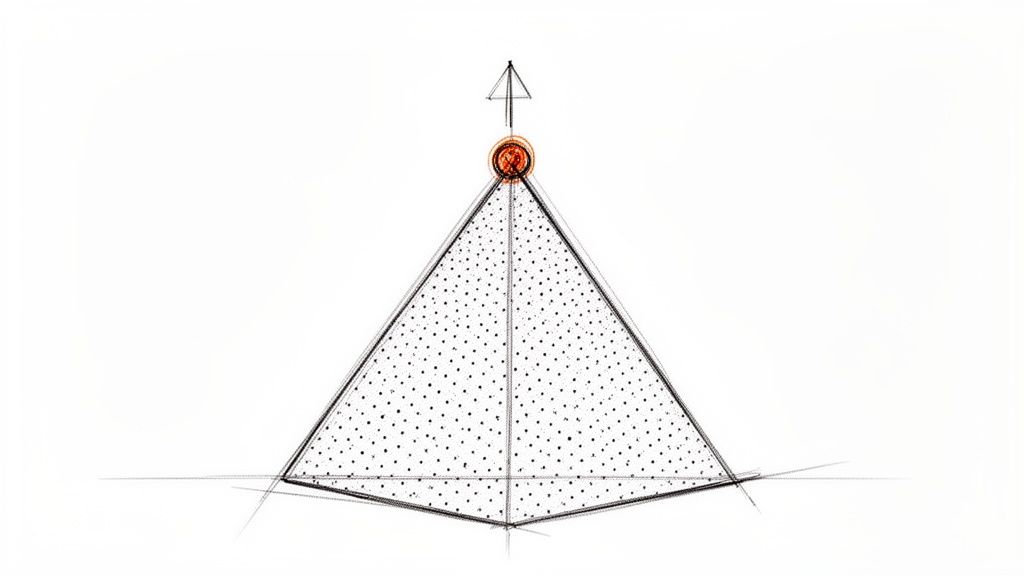
The word "Ultimately" is a sophisticated transition word for a conclusion sentence that signals a shift from summarizing points to revealing the most fundamental truth. It frames your conclusion as the final, most important takeaway derived from all preceding arguments.
This transition adds weight and authority, suggesting you have considered all factors and are now presenting the core insight. It's particularly effective in persuasive writing where your goal is to leave a lasting impression of conviction. It tells your reader, "After all is said and done, this is what truly matters."
When to Use "Ultimately"
This word is best used in contexts where you want to convey analytical depth and assert a definitive final point. It excels in persuasive, analytical, and strategic communication for content creators and professionals alike.
- Persuasive Essays & Opinion Pieces: Ideal for driving home your central argument with a sense of final authority.
- Business Case Studies & Strategic Reports: Use it to present the final outcome or the most critical strategic lesson from your analysis.
- Professional Blog Posts: Effective for articles on industry trends or thought leadership, positioning your conclusion as an expert insight.
Practical Examples
- Persuasive Essay: "Ultimately, while the economic arguments for the policy are valid, its long-term social impact is what will define its legacy."
- Business Report: "Ultimately, the success of our Q4 campaign was driven not by budget, but by our team's ability to pivot quickly to emerging consumer trends."
Actionable Tips for Implementation
Using "Ultimately" requires that the body of your text has built a strong foundation of evidence. Its impact is lost if your final point doesn't feel earned from the arguments you've presented.
Pro-Tip: Follow "Ultimately" with your most compelling truth. This is your chance to reframe the entire discussion under one powerful, overarching idea. Structuring this as a complex sentence can add significant depth. To learn more, explore our guide to compound and complex sentences.
When reviewing AI-generated content, you might find it defaults to basic concluding phrases. At PureWrite, we help you integrate powerful words like "Ultimately" to elevate the tone, making your writing sound more analytical and authoritative rather than formulaic.
4. In the End
The phrase "In the End" is a conversational yet effective transition word for a conclusion sentence that signals finality with a slightly informal, reflective tone. It's a versatile choice for content that aims to connect with a broader audience.
This phrase has a subtle storytelling quality, suggesting a process has reached its natural resolution. It implies that after all considerations, a simple truth has emerged. This human touch makes it particularly effective for blog posts, personal essays, and professional content where relatability is key.
When to Use "In the End"
This phrase is best suited for contexts where you want to sound conclusive yet approachable. Its reflective nature works well when summarizing a narrative or a series of arguments, making your conclusion feel earned rather than just stated.
- Blog Posts and Articles: Perfect for thought leadership or lifestyle content where a personal, conclusive voice is beneficial.
- Personal Essays: Adds a reflective, summarizing quality to opinion pieces and narrative-driven writing.
- Business Correspondence: Works well in internal communications or emails to clients where a friendly yet decisive tone is appropriate.
Practical Examples
- Blog Post: "In the end, while numerous marketing strategies can yield results, authentic engagement with your community remains the most sustainable path to growth."
- Email: "In the end, we decided to proceed with the vendor who best understood our long-term vision for the project."
Actionable Tips for Implementation
While "In the End" is flexible, it's most impactful when it concludes a line of reasoning or a story. Avoid using it to introduce brand new information; its purpose is to crystallize what you have already discussed.
Pro-Tip: Pair "In the End" with a concise, actionable final thought to maximize engagement. This encourages the reader to not only agree with your conclusion but to act on it. For more on creating impactful final statements, explore our guide to what is concise writing.
If you’re using AI tools, conclusions can feel generic. At PureWrite, our tool can help ensure the entire concluding paragraph matches this natural tone, creating a seamless and trustworthy finish that reflects authentic writing.
5. As a Result
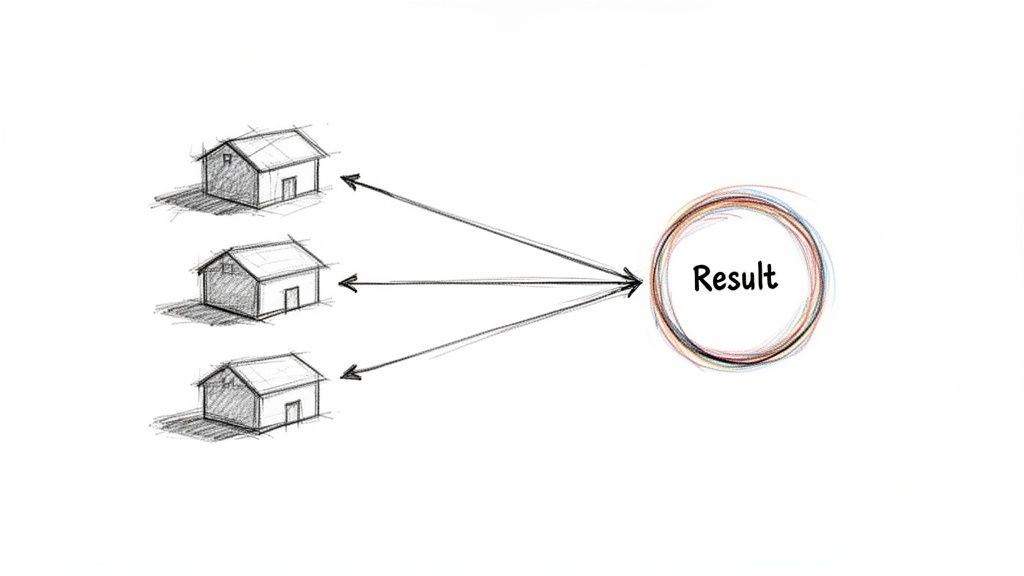
The phrase "As a Result" is a powerful transition word for a conclusion sentence that establishes a clear cause-and-effect relationship. It signals that your conclusion is a direct and logical outcome of the evidence or events previously discussed.
This phrase frames your conclusion not as a simple summary, but as an inevitable consequence. By using "As a Result," you emphasize that your points lead to a specific, demonstrable outcome, which enhances the credibility of your writing.
When to Use "As a Result"
This transition is most impactful in analytical and data-driven writing where demonstrating clear consequences is the main goal. It bridges the gap between presenting information and explaining its significance.
- Research and Scientific Papers: Perfect for concluding sections that present the implications of experimental findings.
- Business Reports and Case Studies: Use it to connect strategic actions or market trends to measurable outcomes, such as ROI.
- Data-Driven Marketing Content: Effectively demonstrates how specific marketing efforts led to tangible results like increased leads or sales.
Practical Examples
- Research: "As a result, our findings challenge the existing paradigm and suggest a new model for cellular regeneration is required."
- Business: "The company streamlined its supply chain and invested in automation. As a result, operational costs decreased by 18% in the final quarter."
- Marketing: "We implemented a targeted social media campaign focused on video content. As a result, user engagement increased by 45% over three months."
Actionable Tips for Implementation
Using "As a Result" requires that you have clearly established the causal links earlier in your text. It loses its impact if the connection between your premises and conclusion is weak or unclear.
Pro-Tip: Strengthen this transition by following it with specific, quantifiable outcomes. Instead of saying "As a result, the project was successful," provide the data: "As a result, the project exceeded its fundraising goal by $50,000."
If your AI-generated draft sounds a bit generic, transitions like this help add analytical rigor. Our tool at PureWrite helps you identify opportunities to use more impactful, logical connectors, transforming a simple summary into a powerful, consequence-driven conclusion.
6. To This End
The phrase "To This End" is a sophisticated and purpose-driven transition word for a conclusion sentence. It uniquely positions the conclusion as the logical fulfillment of an objective stated at the beginning of your text.
This transition conveys a strong sense of cohesion and deliberate design. It tells your reader that the journey from the introduction to the conclusion has been purposeful, making it an excellent choice for structured arguments where the final thoughts are directly tied to an initial objective.
When to Use "To This End"
This phrase excels in formal and strategic contexts where demonstrating a clear, goal-oriented structure is essential. It reinforces that your conclusion is not just a summary but a direct response to a stated purpose.
- Academic and Research Papers: Perfect for dissertations or papers where you must prove how your research fulfills the initial hypothesis.
- Strategic Business Documents: Use it in business proposals or project plans to show how proposed actions align with company objectives.
- Policy and Recommendation Reports: Ideal for concluding policy briefs where the final advice directly addresses a stated problem.
Practical Examples
- Academic: "The primary objective was to identify the core variables influencing consumer behavior. To this end, our findings confirm that price sensitivity has become the dominant factor."
- Business: "Our company has committed to reducing its carbon footprint by 20%. To this end, the board has approved a full-scale transition to renewable energy sources."
Actionable Tips for Implementation
"To This End" is most impactful when the introduction or body of your text clearly establishes a goal or question. Using it without this setup can make your conclusion feel disconnected.
Pro-Tip: For maximum effect, explicitly pair "To This End" with a direct reference to the goal or thesis statement you presented in your introduction. This creates a powerful and satisfying sense of closure for the reader.
AI-generated drafts can sometimes lack this kind of structural cohesion. Our tool at PureWrite helps you ethically refine your text, suggesting transitions that create a more purposeful and authentic flow from introduction to conclusion.
7. Considering All of This
The phrase "Considering All of This" is a reflective and holistic transition word for a conclusion sentence. It signals that your conclusion is a thoughtful synthesis of all the evidence and arguments presented throughout the text.
This phrase prompts a moment of reflection, inviting your audience to view the entire discussion as a cohesive whole. This approach is particularly effective in complex analyses where the final point is the culmination of multiple interconnected ideas.
When to Use "Considering All of This"
This transition is best suited for content that explores multiple facets of a topic and aims to guide the reader toward a well-reasoned final perspective.
- Thought Leadership and Opinion Essays: Perfect for articles where you have built a case piece by piece and now want to present your final, overarching insight.
- In-Depth Blog Posts: Use it when analyzing complex issues or industry trends to show that your conclusion is based on a thorough examination.
- Persuasive Marketing Content: Ideal for positioning a product as the logical solution after discussing various customer pain points.
Practical Examples
- Blog Post: "Considering all of this, it's clear that a multi-channel approach isn't just an option for modern marketers; it's an absolute necessity."
- Opinion Essay: "Considering all of this, the argument for a four-day work week moves beyond employee wellness and becomes a compelling strategy for economic sustainability."
Actionable Tips for Implementation
The power of "Considering All of This" comes from its promise of synthesis. Ensure your concluding statement lives up to that promise by connecting disparate points into a single, powerful takeaway.
Pro-Tip: Follow this phrase with a clear and decisive statement that provides a new insight or a call to action. It should feel like the final, logical step in the reader’s journey through your content, not just a recap.
This phrase has a naturally human and conversational feel. When you use PureWrite to humanize your content, we often suggest similar reflective phrases to ensure your AI-generated drafts connect with readers on a more thoughtful level, promoting authentic writing.
8. Therefore
The word "Therefore" is a classic and powerful transition word for a conclusion sentence that signals a logical deduction. Rooted in formal discourse, it explicitly tells your reader that the following statement is a direct consequence of the evidence presented.
This transition establishes a cause-and-effect relationship between your supporting points and your final statement. Using "Therefore" implies that, given the premises you've laid out, your conclusion is a logical necessity, adding weight and authority to your final thoughts.
When to Use "Therefore"
"Therefore" is most potent in contexts where an argument has been built systematically, and the conclusion is a direct, reasoned outcome. It bridges the gap between evidence and final judgment.
- Academic and Scientific Papers: Perfect for concluding a research paper where the final statement is a direct result of the data and analysis.
- Legal and Philosophical Arguments: Use it in analytical essays to present a final, logically derived conclusion from preceding arguments.
- Formal Business Proposals: Effective in reports where a recommended action is the only logical choice based on market analysis.
Practical Examples
- Academic: "The control group showed no significant changes, while the experimental group demonstrated a 40% improvement; therefore, the new therapy can be considered effective."
- Business: "Our competitor's market share has declined for three consecutive quarters. Therefore, now is the optimal time to launch an aggressive expansion campaign."
Actionable Tips for Implementation
While "Therefore" is authoritative, it should be used precisely. Misusing it to state a conclusion that doesn't logically follow from your evidence can undermine your entire argument and damage your credibility.
Pro-Tip: Reserve "Therefore" for moments when your conclusion is truly an inescapable result of the evidence. To understand how such words function grammatically, explore our guide on adverb clauses and their examples.
AI-generated text can sometimes overuse formal words, making it sound robotic. At PureWrite, we help you ethically adjust such language to better match a modern, professional tone without losing the logical strength of your conclusion, ensuring your writing is both authoritative and readable.
8 Conclusion Transition Words Comparison
| Phrase | 🔄 Complexity | ⚡ Resource needs | ⭐ Effectiveness | 📊 Outcomes & ideal use cases | 💡 Tip |
|---|---|---|---|---|---|
| In Conclusion | 🔄 (Low) | ⚡ (Low) | ⭐⭐⭐ | Clear summary signal; best for academic papers, reports, legal docs | Use for formal work; follow with a strong thesis restatement and humanize to avoid sounding formulaic |
| To Summarize | 🔄 (Low) | ⚡⚡ (Low–Medium) | ⭐⭐⭐⭐ | Actionable recap; suited for blogs, technical docs, emails, guides | Follow with bullet points or numbered takeaways to improve scannability |
| Ultimately | 🔄🔄 (Medium) | ⚡⚡ (Medium) | ⭐⭐⭐⭐ | Emphasizes final, most important insight; ideal for persuasive essays, executive summaries | Use only when evidence supports a decisive claim; end with the strongest takeaway |
| In the End | 🔄 (Low) | ⚡ (Low) | ⭐⭐⭐⭐ | Conversational closure for blogs, thought pieces, emails, storytelling | Good for general audiences—pair with actionable final thoughts to boost engagement |
| As a Result | 🔄🔄 (Medium) | ⚡⚡⚡ (Medium–High) | ⭐⭐⭐⭐ | Shows cause → effect; best for research, case studies, ROI reports, data-driven content | Follow with specific, measurable outcomes to substantiate the causal link |
| To This End | 🔄🔄🔄 (High) | ⚡⚡ (Medium) | ⭐⭐⭐⭐ | Purpose-driven conclusion for dissertations, strategic proposals, policy docs | Use in formal/strategic writing; reference the original objective to reinforce cohesion |
| Considering All of This | 🔄🔄 (Medium) | ⚡⚡ (Medium) | ⭐⭐⭐⭐ | Reflective synthesis for long-form essays, thought leadership, in-depth analyses | Use after presenting multiple perspectives; then deliver a concise, actionable conclusion |
| Therefore | 🔄🔄 (Medium) | ⚡⚡ (Medium) | ⭐⭐⭐⭐ | Logical endpoint for academic, philosophical, and formal business arguments | Reserve for tightly-supported arguments; humanize surrounding sentences for modern readability |
From Robotic to Authentic: Humanizing Your Conclusions with PureWrite
Navigating conclusion transitions can feel tricky. You want to avoid overused phrases like "In conclusion" but need the right word to signal your closing thoughts. This guide has equipped you with a versatile toolkit of transition words for a conclusion sentence, showing you how and why each phrase works in different scenarios.
We explored how simple shifts in language can dramatically alter the impact of your final statements. A word like "Therefore" signals a logical deduction, while "In the end" offers a more reflective, narrative-style closure. The goal is not just to signal the end but to reinforce your core message and leave a lasting impression on your reader.
Mastering the Art of the Final Word
The most critical takeaway is that the "best" transition is entirely contextual. Your choice should always be deliberate, guided by three key factors: your audience, your purpose, and your voice.
Consciously varying your concluding phrases across different documents is a hallmark of a skilled writer. It shows you are in command of your language, rather than relying on a robotic formula.
Beyond the Words: Preserving Your Authentic Voice
Many content creators use AI tools for a first draft. While efficient, these platforms often fall into predictable patterns, littering text with clichéd transitions. This is where an ethical approach to AI becomes essential: using it to help you write better, not to write for you.
Your insights, your tone, and your unique perspective are what make your content valuable. This principle of authenticity is vital across all forms of communication. To ensure your message truly resonates, consider how similar principles apply to crafting authentic posts. The goal is always to build a genuine connection with your audience.
Ultimately, the power of a great conclusion lies in its ability to provide satisfying closure while reinforcing the value you've delivered. By thoughtfully selecting the right transition words for a conclusion sentence, you transform a simple ending into a powerful final statement.
Ready to elevate your AI-generated drafts from robotic to remarkable? PureWrite helps you identify and replace repetitive transition words, ensuring your conclusions sound genuinely human. Paste your text into our tool and watch as we suggest context-aware alternatives that preserve your unique voice, making your writing more engaging and authentic. Try PureWrite today to refine your writing and perfect your conclusions.